NAKHCHIVAN AUTONOMOUS REPUBLIC
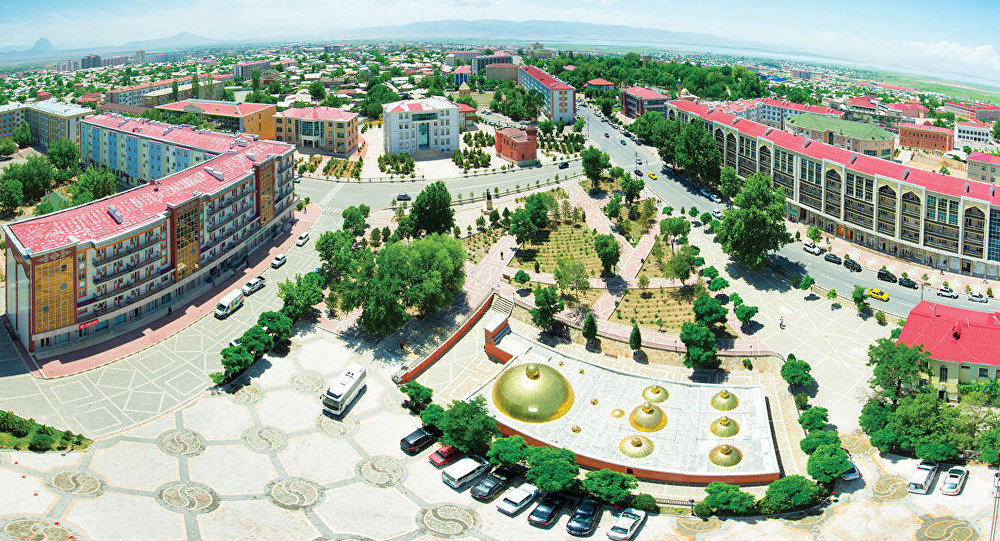 The Nakhchivan Autonomous Republic (NAR) is located in the south-west of Azerbaijan. It is separated from the main territory of the Republic of Azerbaijan by a narrow strip of another state. In 1929-1930, part of the autonomous republic was torn down by the Kremlin regime and handed over to Armenia, which now covers 5,365 square kilometers. Throughout its history, Nakhchivan has been bound by indestructible ties with Azerbaijan. As a result of Armenian aggression, Nakhchivan was forced to distance itself from Azerbaijan and face the difficulties of the blockade since the 1990s. .
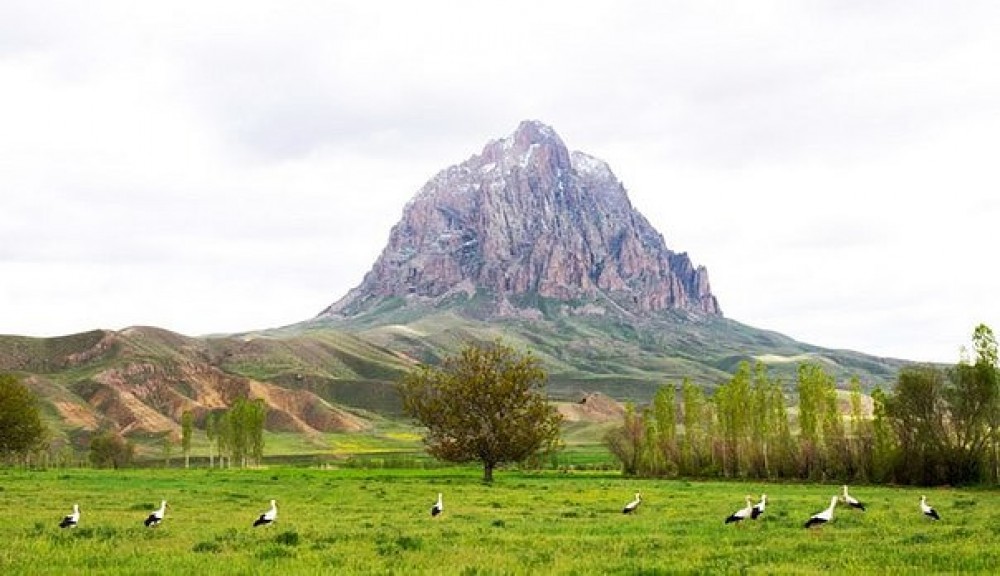
This is a mountainous area - more than 30 percent of the territory of the autonomous republic is located 600-1000 meters above sea level. The highest mountains in the region are QAPICIG (3904 m) and ILANDAG (2385 m).
The Autonomous Republic is rich in rare mineral waters such as marble, rock salt, lime, gypsum deposits, SIRAB, BADAMLI, VAYXIR, NAHAJIR, KIZILCIR. Groundwater is generally abundant here, so historically, the construction of canals in the region - a unique groundwater tunnel - has reached a high level. They descend from the earth in steps to the kahriz, and there are those with which water is simply brought to the surface (just like modern water pipes). Kahriz masters (kankans) have preserved their professional skills to the present day.
The ARAZ River flows along the border with IRAN and TURKEY, in addition, about 40 small and medium-sized rivers flow in the country (ORDUBADCHAY, ALINCACHAY, GILANCHAY, NAKHCHIVANCHAY, ARPACHAY, etc.). Along with the world-famous Batabat Lake, which is a "floating island", there are also artificial lakes to irrigate the lands of Babek and Julfa districts - they are located near the village of GAZANCHI at an altitude of 1,500 meters above sea level.
Numerous ruins of ancient cities, towers, castles and mausoleums remain in the whole region. This land, like its natural resources, has always been attractive to the occupiers due to its strategic importance.
The Nakhchivan Autonomous Republic is distinguished by its healthy climate, medicinal mineral waters and rich medicinal plants.
 NAKHCHIVAN CITY is the administrative center of the Nakhchivan Autonomous Republic of Azerbaijan. It is located on the right bank of the Nakhchivan River, at an altitude of 1000 m above sea level. It is 560 kilometers away from Baku.
Nakhchivan is the oldest city in the world belonging to Azerbaijanis. The Azerbaijani people created an ancient and rich culture in these lands. At the same time, Nakhchivan is considered one of the oldest centers in the world. The rich history, scientific and cultural heritage of the Azerbaijani people is formed in these areas.
Experts have interpreted the origin of the word Nakhchivan in several ways. According to folk etymology, Nakhchivan "Naqshi-jahan" means the decoration of the world. According to the most popular legend, Nakhchivan is associated with the prophet Noah. the resulting area is considered.
Nakhchivan was one of the oldest and largest cities in Azerbaijan and the East. The city's history goes back thousands of years: archaeologists have found many material cultural artifacts from the second and first millennia BC.
Locals connect the creation of a settlement on the site of Nakhchivan with the legend of the prophet Noah, who survived the Great Flood. According to legend, Noah's ark touched the mountain peaks of the Lesser Caucasus three times before landing, and one of them - Agridag - was divided into two parts - Great Agridag and Little Agridag.
The other submarine peaks touched by the ship were Gapichig, Ilandagh and Alagoz. According to local legend, Noah lived here for a long time after the flood and died there. Until recently, longtime elders claimed that they knew where Noah was buried. This legend is so widespread among the people that even the famous artist Bahruz Kangarli created a painting called "Noah's Tomb".
The earliest written source mentioning Nakhchivan is the works of Ptolemy (II century). He mentions the name of Nakhchivan as "Nakhsuana". In medieval Arabic sources, the name of the city is written as "Nashava", but Mohammad Nakhchivani, Hamdullah Qazvini, Katib Chalabi and Evliya Chalabi and others. The name of the city is reveredly called "Naqshi-Jahan" ("Decoration of the World") in the works of famous medieval authors such as In the early Middle Ages, Nakhchivan had close and intensive relations with the countries of Asia Minor, the Middle East and the South Caucasus.
The beauty of the city and its geopolitical position led to frequent raids by neighboring states, as a result of which the city was destroyed several times. But every time Nakhchivan stubbornly stood up again, 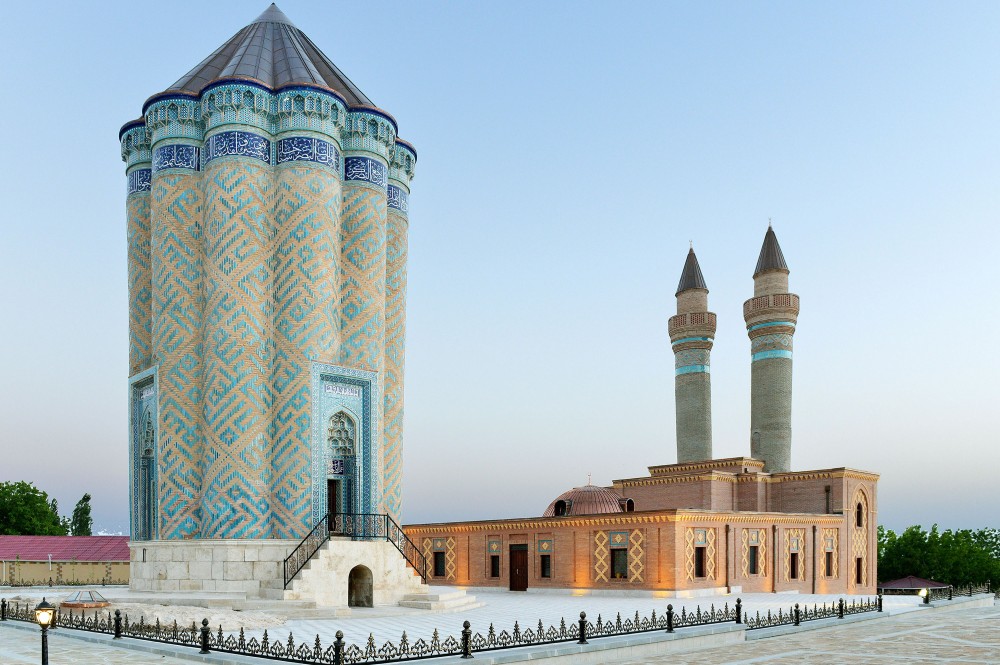 restored the destroyed ones, and fell into a better shape than before. For example, in the middle of the first century AD, the Byzantine emperor Irakli II plundered and destroyed the city, which was repeatedly destroyed by the Mongol invaders, and became a "dispute" between Byzantium and the Arab Caliphate. However, Nakhchivan has always been considered one of the capitals of the Atabey State of Azerbaijan, ruled by state institutions established in this region - Sajis, Salaris, as well as the Eldeniz dynasty.
In the 12th century, Nakhchivan had a population of 200,000, trade flourished, and the city became famous for its masters and craftsmen: potters, jewelers, and glassblowers. However, the city was better known for its builders - the famous NAKHCHIVAN SCHOOL OF ARCHITECTURE appeared here, and the construction work was widespread. According to the testimony of travelers who admired the beauty of the city, in the Middle Ages, the famous palace complex of the Eldeniz, the Friday mosque, a madrasa, which became the center of Muslim education, government buildings, the palaces of the nobility were built here. Written sources say that at that time there were "20,000 houses, 70 religious buildings, 20 caravanserais, 7 baths, several markets" in the city.
French travelers Pierre Chardin and Dubois de Monper and English traveler Porter note that this is a beautiful city where ancient architectural monuments are preserved. Ottoman traveler Evliya Çelebi talks about the fragrant water of local baths, where a basket of rose petals is thrown into the pool every day.
This ancient city has its own culture and an integral part of it is the local cuisine, which is popular throughout the country. For example, a "field" made by filling specially dried peaches with ground nuts and powdered sugar; A special "pumpkin" with the addition of honey to the cake belongs only to the cuisine of this place.
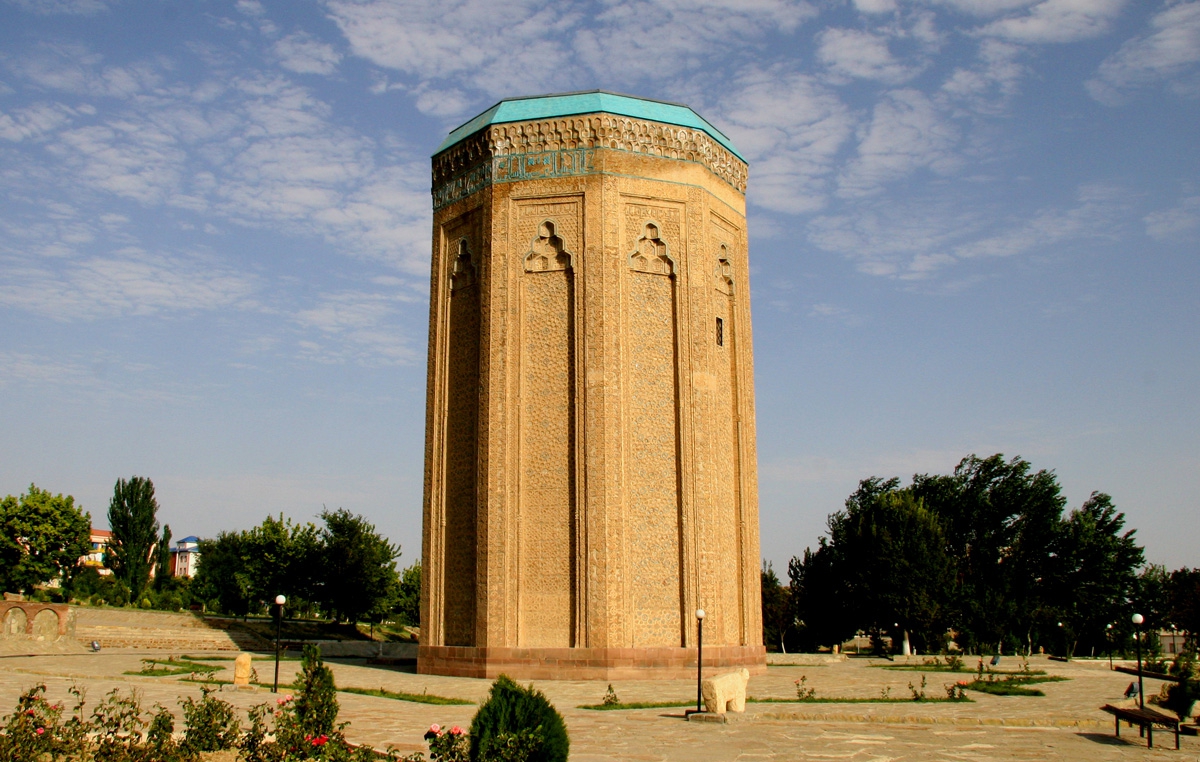 The land of Nakhchivan is the homeland of the great architect of the XII century AJAMI IBN ABU BAKR NAKHCHIVANI. Of his works, YUSUF IBN KUSEYIR (Atababa dome), the tomb of MOMINA-KHATUN, the portal of the minaret JUMA MOSQUE have survived to the present day. It is believed that Ajami created the image of the time by creating the mausoleum of Momina-Khatun. It was not in vain that he painted the tomb with these inscriptions: "We go, the world remains, we die - our memory remains." The geometric and epigraphic patterns that adorn the mausoleum are executed with jeweler's precision: it resembles a favorite gem of the East - a sparkling turquoise.
Famous scientist, statesman, writer, philologist, author of the first Persian-Turkish dictionary HINDUSHAH BIN SANJAR BIN ABDULLA NAKHCHIVANI (XIII-XIV centuries) was born here. His son, MAKHAMMAD NAKHCHIVANI, who wrote a book on taxation, was a well-known statesman of the time in the field of finance (XIII-XIV centuries). Nakhchivan as well as KALBALI KHAN NAKHCHIVANSKI, his son, General HUSEYN KHAN NAKHCHIVANSKI, military figure JAMSHID NAKHCHIVANSKI, classical writer JALIL MAMMADGULUZADE
Nakhchivan is also the homeland of national leader of Azerbaijan Heydar Aliyev.
Great attention is paid to science and education in modern Nakhchivan. There is a university, a branch of the Azerbaijan National Academy of Sciences, and an academy-campus has been built here. Special attention is paid to schools - the old ones are being repaired, new ones are being built, for example, a very large, well-equipped school named after H. Aliyev has been put into operation. There is a Palace of Culture, Drama Theater, Puppet Theater. An well-equipped Olympic sports complex has been put into operation.
The city has a Carpet Museum, a Literature Museum and a History Museum. There is also a house-museum and a mausoleum of writer and playwright Huseyn Javid. Many historical monuments in the city - architectural complex IMAMZADE, JUMA MOSQUE, ZAVIYA MOSQUE, "PIRGAMISH", "KHAN HOUSE", ISMAIL KHAN BATH, YUSUF IBN KUSEYIR MAUSOLEUM, MOMINA-KHAT. are protected.
You can stay in several hotels in Nakhchivan. Among them are "Grand Nakhchivan", "Tabriz", "Togrul", "Azeri", "Ganjlik" shopping center hotel and others. can be shown. In front of the Tabriz Hotel, in Dada Gorgud Square, there is a historical and architectural monument of the XVIII century - Ismail Khan's bath and a monument to Dada Gorgud.
Natural-therapeutic objects of Nakhchivan
The Nakhchivan Autonomous Republic, rich in natural resources, is famous for its natural and therapeutic facilities. Thousands of people are healed here.
Daridag Balneological Hospital.
Daridag arsenic thermal water, located 15 km northeast of Julfa, plays an important role in the treatment of many skin diseases. Among them, it is necessary to take Daridag water baths for the treatment of itching, pyaderma and other diseases. Water also contains iodine, boron, bromine, strontium and lithium. It is recommended to drink this water for people with diseases of the gastrointestinal tract and joints. These baths are also invaluable in the treatment of the nervous system. The best arsenic waters are those with alkaline-salt content, which makes Daridag water the first not only in the Caucasus, but also in the whole world, for example, among the world-famous Renchenko and Levico in Italy and La Bur-Bulvo in France. The amount of arsenic in Renchenko water is higher than in Daridag water. but it does not contain alkalis that have a beneficial effect on the body. A two-building hospital with full medical facilities has been built here.
Badamli Physiotherapy Hospital was established in 1980 in Badamli settlement of Shahbuz region. Diseases of the gastrointestinal tract are treated with "Almond" mineral water: chronic gastritis, chronic hepato-cholecystitis, gallstones, chronic enteroclitis, chronic gastric ulcer, chronic pancreatitis.
Duzdag physiotherapy center . The famous "Duzdag" sanatorium was considered one of the most unique places in the USSR. This physiotherapy center was established in an abandoned salt mine, 14 km from Nakhchivan. Today 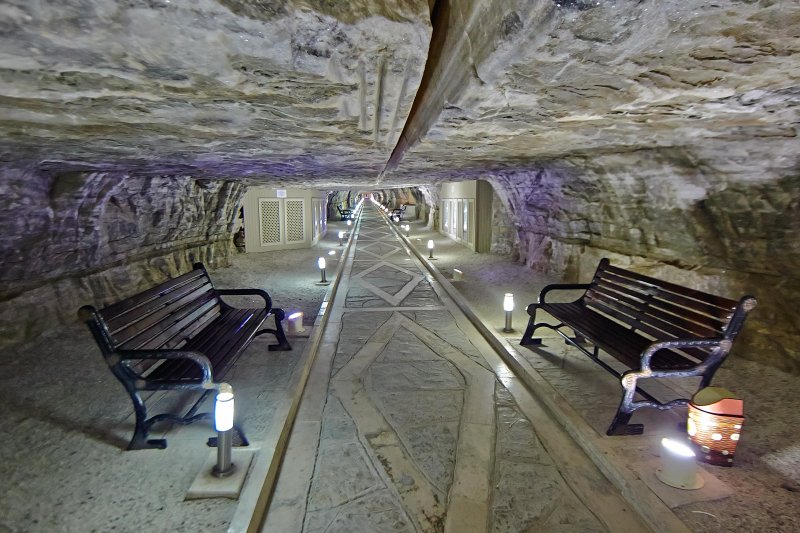 , Duzdag is the best treatment center not only for asthma, but also for allergic diseases. Duzdag was the most effective in the treatment of bronchial asthma in the world. The sanatorium is located in the depths of Salt Mountain, which has been a place of salt production for many years.
A 5-star hotel has been built near the sanatorium. All the requirements and wishes of patients and their attendants are taken into account here. Sanatorium and hotel - a single medical and health center, both in the sanatorium and in the hotel, patients are provided with all types of physiotherapy, which greatly increases the effectiveness of treatment. The construction of a modern hotel near the sanatorium is a shining example of cooperation between medicine and tourism. Today, "Duzdag" is a tourist facility with many statistics in the field of treatment and providing a guaranteed high level of medical services.
Nahajir - Nahajir is a health resort located in the north-east of Nakhchivan. This place is located on the slopes of Mount Nahajir. The main reserve of the resort consists of carbonate (1.3 g / l free cabonate) and iron-hydrocarbonate-sodium, mineral water-6 g / l. Good results can be obtained in the treatment of anemia and digestive problems.
Batabat is a resort zone with a healing climate, located 62 km northeast of the city of Batabat-Nakhchivan, on the slopes of the Lesser Caucasus Mountains, at an altitude of 1700 m above sea level.
Along with the climate, there are waters containing carbonate, hydrocarbonate, calcium, sodium, magnesium, which are used in the treatment of aerogeliotherapy. The mineral content of the water is 0.5 g / l. This water is used to treat the gastrointestinal tract. Mild climate, lakes, rich flora of alpine meadows, beautiful landscapes have a good effect on the human body.
ORDUBAD
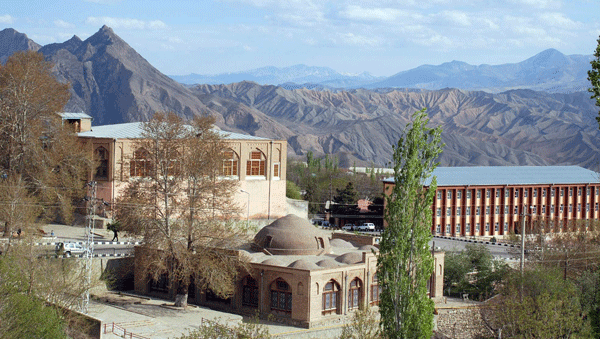 ORDUBAD DISTRICT borders Armenia in the north and east, and the Islamic Republic of Iran in the south. Located in the eastern part of the NMR.
The climate is contrasting - cold winters, hot summers. It is rich in fauna and flora, amazingly fresh air, many medicinal plants and fruits. Many historical monuments of the Bronze Age: stone ram statues, the remains of a settlement of the II-I millennia BC in the village of SABIR, the ruins of the ancient city of GILAN near the village of AZA, KILIT, VELAVER, AYLIS, AZA, KOTAM, BILAV, ANADI VENAD villages ruins of the city, SHAKHTAKHTI tower near ANDEMIC village, XIX century mosque, XIV century mausoleum near DAR village, bridge built in 1826 near AZA village, ruins of XIV century bath near DAR village and many historical monuments remain.
Rare petroglyphs of the III-II millennia BC have been preserved in GAMIGAYA, 60 km south of Ordubad. There are thousands of pictures depicting people, household, hunting scenes, real and fantastic animals.
ORDUBAD CITY is the administrative center of Ordubad district. This is the second largest city of the Nakhchivan Autonomous Republic. The city has been known since the 12th century and is located at an altitude of 850 meters above sea level. The city of Ordubad has been declared a state historical and architectural reserve due to its antiquity, the presence of many historical monuments, the fact that new buildings almost did not change its appearance, and the preserved lifestyle of the residents.
Historical monuments: JUMA MOSQUE with a unique arch, DILYAR MOSQUE, AFGHAN BURGE and balcony of the XVIII century, many ancient springs, caesarean trade complex with a round dome (XIX-XX centuries BC and other centuries) XVIII century
To understand the beauty of this small town and how it preserves the natural aroma of ancient times, it is necessary to see Ordubad. In the shadows formed by the incredibly huge, old plane trees with a circumference of 8 meters, people sit and talk in a hurry, rare mosques, hunting grounds, canals - all this has its own unique features. It is a city inhabited by modern people who preserve the beauty of the ancient national way of life.
There is a rich exposition of history, a museum of local lore, a theater, a house-museum of the writer Mammad Said Ordubadi, who laid the foundation of the historical-romantic genre in Azerbaijani literature. Restoration work is underway in the house of Academician Yusif Mammadaliyev - one of the first presidents of the Azerbaijan Academy of Sciences, founder of Azerbaijan's petrochemistry, brilliant creative personality, organizer of science, a man who made an invaluable contribution to the destruction of Hitler's fascism during World War II.
In ORDUBAD you can stay in the houses of local residents.
CULFA
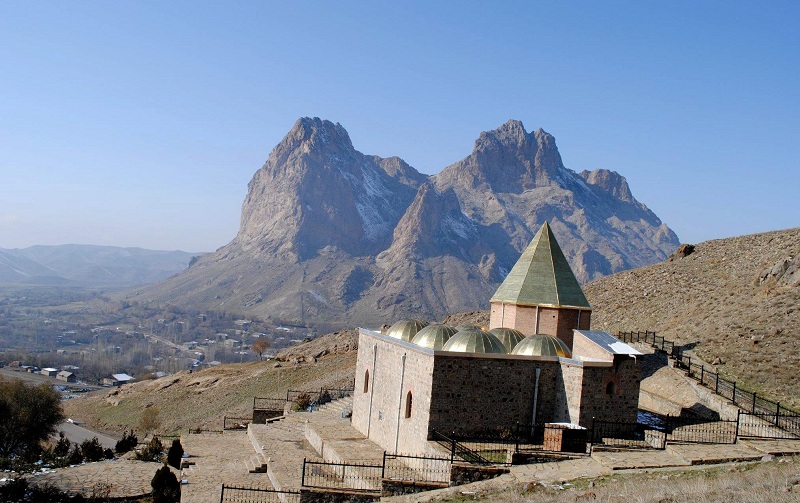
JULFA DISTRICT - Located east of Nakhchivan. It is dry and hot in summer and very cold in winter. About 220-600 mm of precipitation falls annually. The rivers ALINCA, KARDARYA, as well as ARAZ (along the border with Iran) flow here. The mountains along the Julfa Road are very beautiful and unique - geological factors (rock composition, their age, etc.) affect the appearance - the mountains look like giant, domed, fantastic buildings.
Forest massifs are found in the CULFA mountains, beech, hornbeam and oak grow in the forests; The fauna is represented by wolves, foxes and rabbits.
The ruins of ancient buildings remain on the banks of the Araz River. These are the oldest caravanserai of the 13th century in Azerbaijan, the remains of a bridge built in the early 14th century by the order of Nakhchivan khan, ruler Ziyaeddin. XV century). In particular, the remains of the ALINJA fortress (XII-XIII centuries) and many other monuments and ancient buildings can be shown.
There are many (about 40) water sources and springs in the region. One of them, a spring at the foot of the DARIDAG, provides about 500,000 liters of highly mineralized water per day.
JULFA CITY is located on the banks of the Araz River, on the border with Iran. Almost symmetrically to the Azerbaijani JULFA, on the other side of the Araz, the Iranian city of JULFA is located. In the past, the ancient caravan route from Iran to Shirvan, Georgia and Dagestan passed through here. Now there is a border checkpoint here. Here you can stay at the Araz Hotel near the railway station. There is also a restaurant there. You can also dine at Gulustan restaurant and Eldar cafe.
BABEK
BABEK DISTRICT - The Autonomous Republic borders Armenia in the north and Iran in the south. The north and south-east of this area has mountainous terrain, and the south-west is a plain. The highest mountain peaks - KECHELTAPE (2740 meters), GARAGUS (2617 meters), BUZGOV (2470 meters).
There are SIRAB, GAHAB, VAYXIR mineral water springs, rock salt deposits in the region. NAKHCHIVANCHAY and its tributary JAHRICHAY flow here, ARAZ, NEHRAM, UZUNOBA, SIRAB reservoirs are located.
There is no forest in the region, viticulture, grain growing, melon growing and animal husbandry are developed.
There are well-known archeological monuments in the region: GULTEPA and GULTEPA-2, ABBASABAD, VAYKHIR, AZNABYURD ancient ruins.
BABEK CITY is the administrative center of the region. Until 1978, it was called TAZAKEND.
ŞAHBUZ
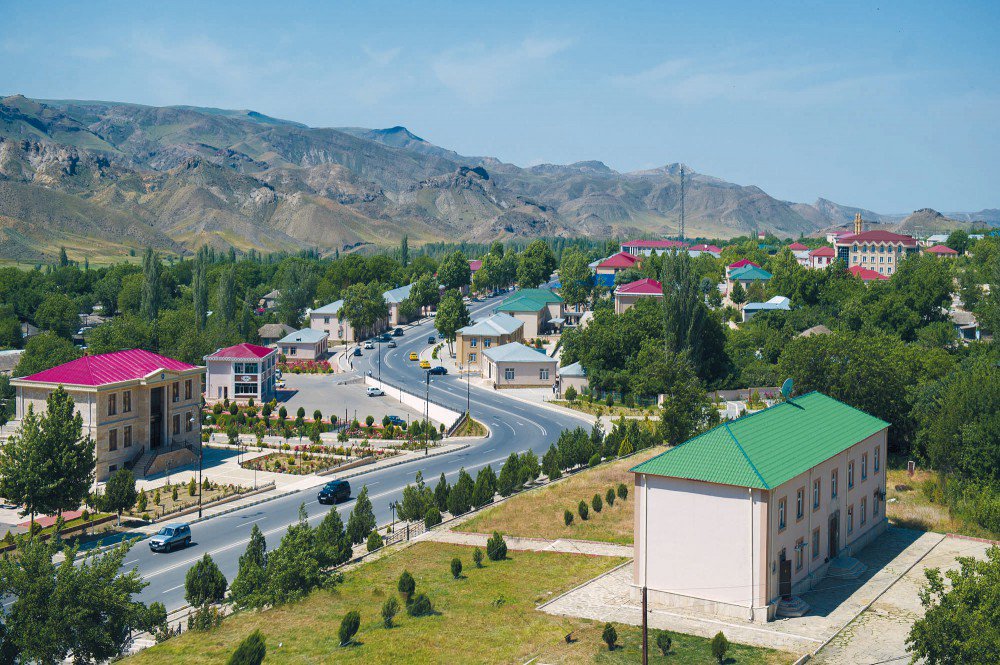 SHAHBUZ DISTRICT - Located in the north of the Nakhchivan Autonomous Republic. This is a mountainous area. The highest point is SALVARTI (3160 meters), KECHELDAG (3115 meters), BICHANEK mountain pass also passes through here.
As in the whole territory of the Autonomous Republic, a lot of groundwater flows here, including BADAMLI, BATABAT, CARAVANSARA, BICHANAK mineral waters. There are sulfur, construction materials, peat deposits. NAKHCHIVANCHAY and its branches: KUKU, SHAHBUZ, SALVARTI. Lakes - GANLIGOL, BATABAT. There are forests in the mountains.
SHAHBUZ CITY is the administrative center of the region. An interesting ancient monument was discovered in the outskirts of the city. Among the people, it is called "Farhad's house" after the hero of Nizami's poem "Farhad and Shirin". In fact, this is the home of an ancient man, and it does not look so ordinary: on the stone wall of the mountain are carved 4 rooms with a "veranda". Archaeologists have also found the ruins of the Shahpur fortress, named after the ancient ruler. It is believed that this name took the form of "Shahbuz" over time.
The famous GARABAGHLAR mausoleum is located in GARABAGHLAR village. Surrounded by gardens, ancient, but still functioning canals, this village is located at the foot of the ZANGAZUR range. The presence of fortifications with towers and a water supply system indicate the ancient origin of this settlement. There is a possibility that the mention of "10,000 houses, 70 mosques, 40 of them with minarets, KARABAKH CITY" mentioned in the manuscript of the XVII century belongs to this village.
SHARUR
SHARUR DISTRICT - Located in the west of the Autonomous Republic, bordering Iran in the south. It has mountainous relief in the north and east of the territory. The DARALAYAZ mountain system passes through here. The highest mountain is QALINGAYA 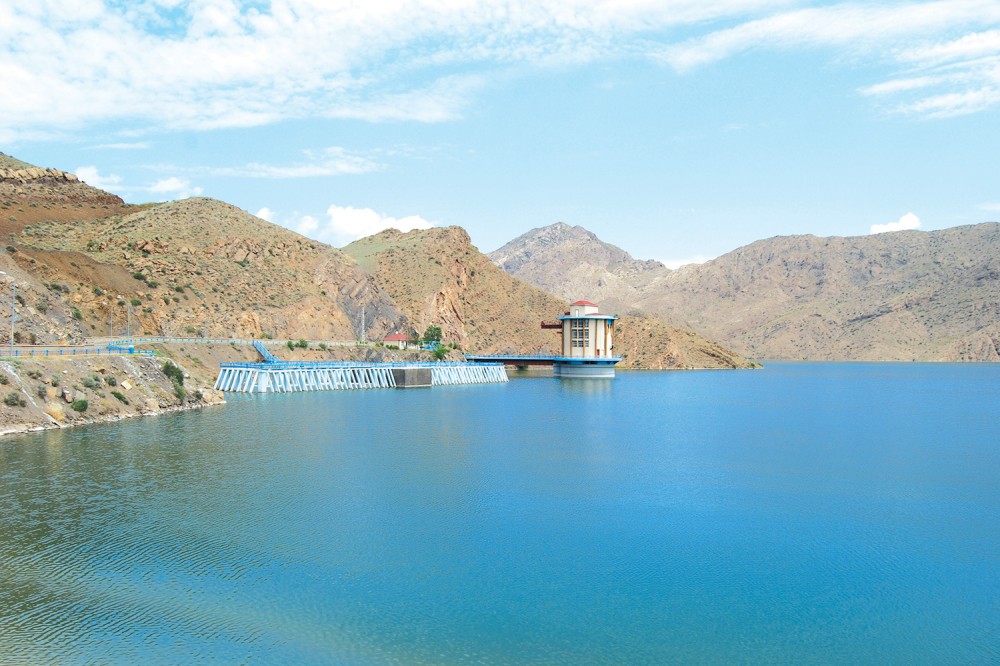 (2775 meters). The climate is semi-desert, arid. But it is quite mild - in winter the temperature rarely drops below +3 degrees, in summer it does not rise above +26 degrees.
ARPACHAY and others flow here from the tributary of the ARAZ river. Arpachay water is used for irrigation. The Arpachay reservoir was built on it. The local fauna is mouflon (mountain sheep), wolves, mountain goats, foxes, wild boars, rabbits.
The few historical monuments here are represented by ancient settlements of the Bronze Age along the banks of the Araz and Arpachay. Stone and obsidian tools of the Mustye period in the GAZMA cave,
Samples of tastefully decorated pottery were found in the Shahtakhti settlement. Arbatan, Vermaziyar, Garahasanli,
Archaeological excavations near the villages of Babeki and Kosajan have shown that ancient settlements were located here. They live in the memory of such toponyms as Koluklar, Kohna, Arbatan, Kohnakend, Kultepe. Many household items and decorated pottery were found here.
SHARUR CITY is the administrative center of Sharur district. It is a new city, created during the construction of the railway. There are two parks, a museum, a stadium, a mosque, a monument to the martyrs and a cinema.
Here, on the other side of the railway, the old city with its baths, markets and mosques is preserved.
Here you can stay in the homes of local residents.
KANGARLI
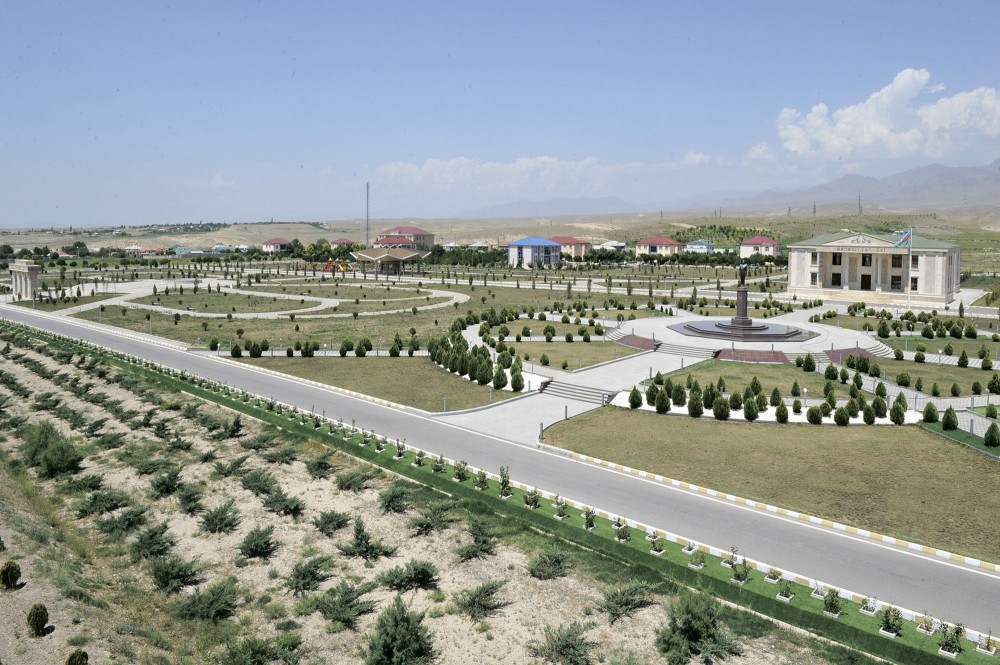 KANGARLI DISTRICT is located between Babek and Sharur districts. The southern part of the region borders with Iran and the north with Armenia. The region has a mountainous relief and is located in the DARALAYAZ mountains.
As everywhere in the Autonomous Republic, the climate is sharply continental - very hot in summer and cold in winter. The Araz River flows through the region, along the state border of Azerbaijan and Iran.
The mountainous terrain, climatic features and the lack of small rivers determine the local vegetation. They are mainly represented by semi-desert and mountain species (shrubs, grasses, rare trees).
Tobacco, grapes, cereals, vegetables and melons are grown in this agricultural region.
As in all parts of the Nakhchivan Autonomous Republic, a large number of ancient monuments remain here, which indicates that the region has been inhabited since archaic times: CHALKHAN GALA mounds, GAZMA cave, as well as QALACIG, GOVURGALA, DAMLAMA, GULAMLITAPE, BALATEPE settlements.
Surviving monuments of later periods: CAME MOSQUE in the village of Khok (XVIII century) and bath in the village of Shahtakhti (XIX century).
GIVRAG settlement is the administrative center of this new district, established in 2004. It is located on the Kivrag Nakhchivan-Sharur highway, 30 km from the capital Nakhchivan. It is 6 km from the settlement to the Araz River.
Due to the fact that the district has recently received the status of the administrative center, Givrag settlement does not yet have the infrastructure to receive tourists. However, you can stay here as a guest in the homes of local residents.
SADARAK
Sadarak region was formed on August 28, 1990. It is located on the border with Turkey in the south-west and with Armenia in the north-west. The center is in Hyderabad, located in 3 villages.
The territory of the region consists of mountains and plains. There are Dahna and Welling mountain heights.
Araz, Karachay and Chapan rivers flow through the area. Agoghlan tomb is located in the north of Sadarak settlement. In addition, there are historical and architectural monuments of the Middle Ages in the region. Sadarak Fortress belongs to the late Bronze Age and early Iron Age.
A press dating back to the 6th-7th centuries has been discovered. Enolithic human centers are located east of Sadaray.


কোন মন্তব্য নেই:
একটি মন্তব্য পোস্ট করুন