NORTH ROUTE:
KHIZI - SIYAZAN - DAVACHI - GUBA - KHACHMAZ - NABRAN
- GUSAR XIZI
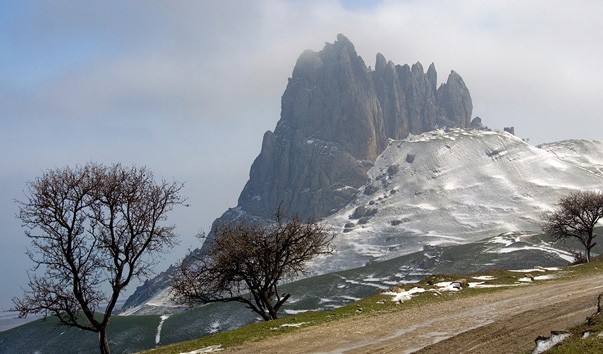 KHIZI DISTRICT is located in the Guba-Khachmaz region of Azerbaijan. Among the administrative districts of the republic with mountainous terrain, the closest to Baku is Khizi: the distance between Baku and Khizi is only 70 km. The climate in this region is temperate and warm, with little rainfall. The eastern part of the region is the Caspian coast.
On the way to Khizi, 10 km from the BAKU-ROSTOV highway, a very interesting natural phenomenon can be observed: different geological rock layers create a very distinctive landscape on the surface of the hills. Experts say that a similar geological event can be found only on Earth, except in the Death Valley in the United States.
"ALTIAGACH" reserve, one of the most beautiful reserves of the republic, is located in Khizi region. 90% of its territory consists of forests. This reserve was established to preserve rare species of animals and plants on the south-eastern slopes of the Greater Caucasus and to prevent erosion processes occurring here. One of the caravan camps built during the reign of the Shirvanshahs was located here. The meaning of the name "Altiagaj" is connected with the words "6 trees": the fact is that the word "Agaj" is an ancient unit of length equal to about 7 kilometers.
The place is so named because the distance from Altiagaj to the city of Shamakhi is 42 km, ie "6 trees". The ancient caravan road connecting Shamakhi with Derbent passed through here. Fans of hiking still make tourist trips from here to MARAZA and SHAMAKHIYA. YASHMA reserve is also located in the territory of Khizi region (near Sumgayit city). With an area of 4 hectares, the reserve has favorable conditions for hunting waterfowl and fishing.
The administrative center of the district is KHIZI CITY. The distance from Baku is 104 km. Khizi is the homeland of the famous Azerbaijani writer and playwright Jafar Jabbarli, who did great work for the development of national cinema. At present, the Azerbaijan State Film Studio is named after him. Well-known Azerbaijani cultural figures Mikayil Mushfig and Jabir Novruz are also from Khizi. A beautiful recreation area called "PARADISE GARDEN" has been created near the city for travelers, tourists and just relaxers. This zone is located in the mountain forest, on the bank of the river ATACHAY, near the ALTIAGAC reserve. 8 km away from Khizi, there is another recreation area called "KIZILGAZMA".
SİYƏZƏN
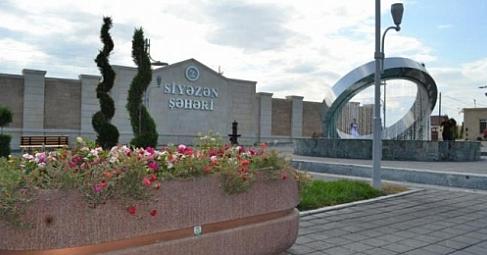 SIYAZAN DISTRICT is located north of the Azerbaijani capital, along the shores of the Caspian Sea. The climate is arid semi-desert, the landscape consists of sparse forests and shrubs. In the animal kingdom, wolves, wild cats, jackals, rabbits and other species predominate. Several species of waterfowl can be found in the coastal zone. Gilgilchay and Atachay rivers flow through this region.
During the early Middle Ages, the second line of the Caspian defense fortifications passed through here (the first line of these fortifications is in Derbent). This line is included in the list of historical and cultural monuments of Azerbaijan protected by the state. GILGILCHAY DEFENSE FORTRESS has also been recommended by UNESCO to be included in the World Cultural Heritage List in the "CASPIAN DEFENSE FORCES" complex. Archaeologists have determined that the construction of the Gilgilchay defense fortification began long ago, long before our era, and in the following period, additional construction work was carried out in this fortification and the fortification was further strengthened.
The fortification walls begin directly in the sea (for many years the water level in the Caspian Sea has changed periodically). The walls of the fortress, which stretch for several kilometers, end in the magnificent CHIRAGQALA GUARD TOWER (5th century). This tower is worth climbing: its historical significance is in its place, and from the top of the mountain there is a beautiful view of the sea and the surrounding mountains.
Here, between the sea and the foothills of the Caucasus Mountains, there is a convenient passage from Azerbaijan to other countries in the north. From ancient times, invaders from neighboring countries and distant lands entered the territory of our country from this area called the Caspian Pass. They raided Azerbaijan, looted the port of Baku, and sometimes went to the interior of the country. Therefore, this fortification was of a defensive nature and was used to transmit a signal to Absheron (Baku) and then to all the border regions of ancient Azerbaijan. The size of the fortification walls and their defensive purpose (it also protected the passages to the Great Silk Road) allow it to be compared with the Great Wall of China, but the object has not yet been restored.
Chiraggala sanatorium attracts attention in QALAALTI resort town, located not far from Chiraggala tower. There is a source of sulfur mineral water of medical importance in its territory. This water is especially useful for patients with stones in the bladder and gallbladder. Along the way to the sanatorium there are numerous kebab shops, cafes and small campsites. Most of them work only in summer.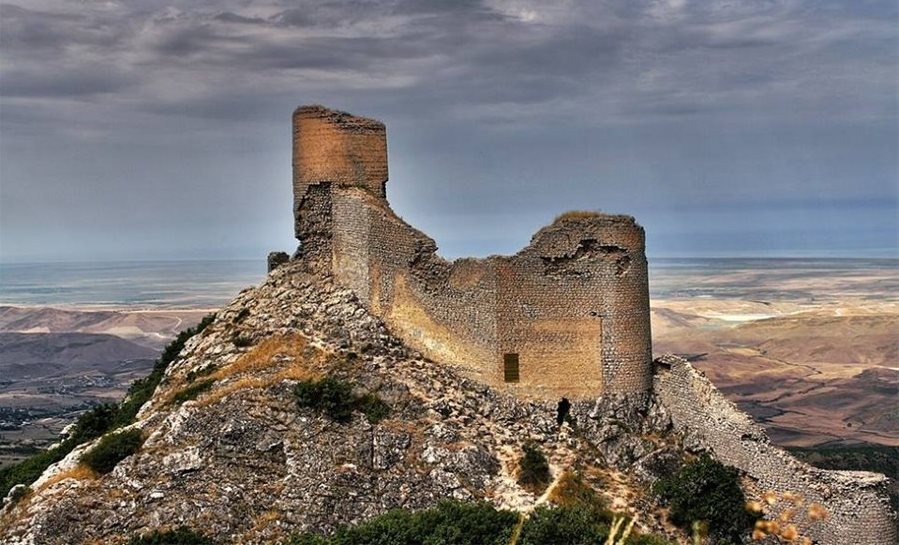
Fragments of another defensive fortification called Beshbarmag near the village of ZARAT have survived. Among the people, these remains are called baba in Khizir. Near the village of Sedan, the remains of the Dindar fortress attract attention.
Crafts such as carpet weaving, wood carving, making folk instruments are widely developed in this region. The center of the region, Siyazan, is 103 km from Baku.
There is no hotel in Siyazan. Therefore, visitors can stay in private homes or in the Chiraggala sanatorium, located not far from the city. If you want to dine in Siyazan, you can use the services of "GORUSH", "ZAFARAN" or "CHIRAGQALA" restaurants. As the city is located near the Caspian Sea, these restaurants offer a wide range of fish dishes in addition to meat and vegetable dishes.
ŞABRAN
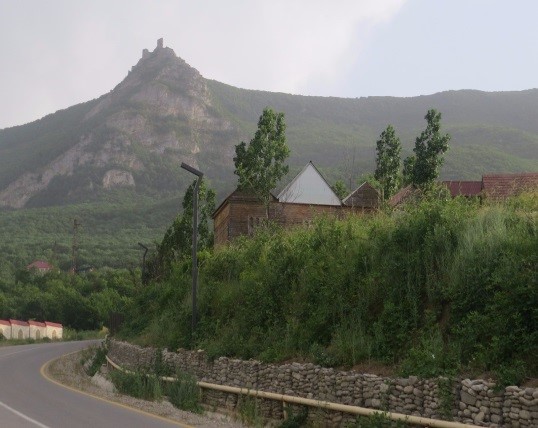 The eastern border of the Shabran district, located north of Baku, stretches along the shores of the Caspian Sea. This name of the region is probably due to the fact that there are many camel caravan routes. In the past, residents of the region kept camels, and those who came to the local markets from neighboring regions bought and sold not only camels, but also poultry, animals, butter and dairy products, honey, wool (camel and sheep wool), and carpets. In addition, there were those who came to join the caravan or to rent camels and sarvans for themselves. In 2010, Deveji district was renamed Shabran district.
A hunting farm called Agzibir was established in the territory of Devechi region, 12 km away from the sea shore. With an area of 1,180 hectares, the farm can catch waterfowl and fish. Three interconnected lakes located in Agzibir have access to the sea. There are also small houses and boats to accommodate hunters. There are many forests in the region (21,500 hectares). Bears, foxes, wolves, jackals, wild boars and gazelles live in these forests. Birds, including waterfowl, partridges, geese, ducks, cranes, blackbirds, partridges and other species can be found. The relief of the area is very diverse. Along with the plains and foothills, there are also rocks and mountains. The place called Kechigaya is very popular among both tourists and locals. There is a river flowing through the rocks, and mineral springs with a lot of sulfur attract attention. The most famous historical and archeological monument in the region is Shabran, located near the village of Shahnazarli (5-18 centuries). In the Middle Ages, Shabran was one of the largest trade and crafts centers in Azerbaijan. Silk production, pottery and glass-making are especially developed here. Archaeological excavations in the area in the 1980s revealed a large number of ceramics, both local and imported, indicating that Shabran had trade relations with a number of eastern countries. During archeological excavations, fragments of a water pipeline built in the 14th century were also found. The pipeline supplied the city with drinking water from a spring more than 10 km from the city.
Galaalti is an original and extremely attractive balneological resort of Azerbaijan. It is located at an altitude of 1000 m above sea level in the picturesque foothills of the Greater Caucasus. Scenic 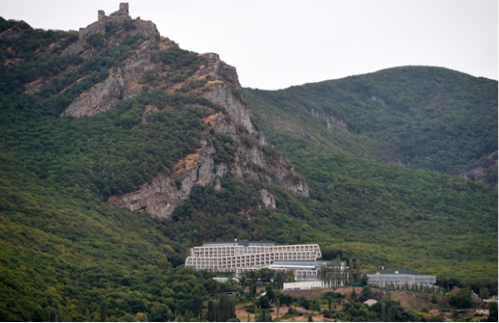 on the shores of the Caspian SeaLocated on forested slopes, the crystal clear air is a place of special natural beauty. Here the mountain air combines with the sea air and creates a low humidity climate that provides people with a comfortable feeling. Galaalti Sanatorium is especially useful for the treatment of kidney stones in the medical and recreational resort complex in the area with a new, unique architectural style and a mineral spring with therapeutic sulfur water. The area is rich in mineral waters and mud volcanoes. Oil reserves have been discovered in the depths of the Zagli-Zeyva forests. You can see many oil rigs on the road. There are two historical and archeological monuments in the region. As for Shabran, first of all we get acquainted with Chiraggala castle. In Azerbaijani, "Galaalti" means "the bottom of the castle." "Chiraggala"
Gulustani Iram town (18th-19th centuries) is located in Gandob village. Numerous archeological objects dating back to the 3rd-2nd millennia BC have been found in the Shabran region. The materials found during the excavations can be found at the Museum of History and Ethnography in Shabran.
The city of Shabran, the administrative center of the region, is located 122 km from Baku. Local "PIRABADIL" and "HERAT PIRABADIL" carpets belong to Guba carpet school according to the classification of specialists. Distinguished by their originality and uniqueness, these carpets are popular among fans of hand-woven carpets.
The city of Shabran is an administrative center located 122 km from Baku. Shabran was built in the V-VII centuries. In the IX-X centuries it became the main political-administrative, trade-cultural and cultural center of the Shirvanshah state. In the middle of the 11th century, the tomb of the Shirvanshah family was located in Shabran. The name of the city was then given around ..
QUBA
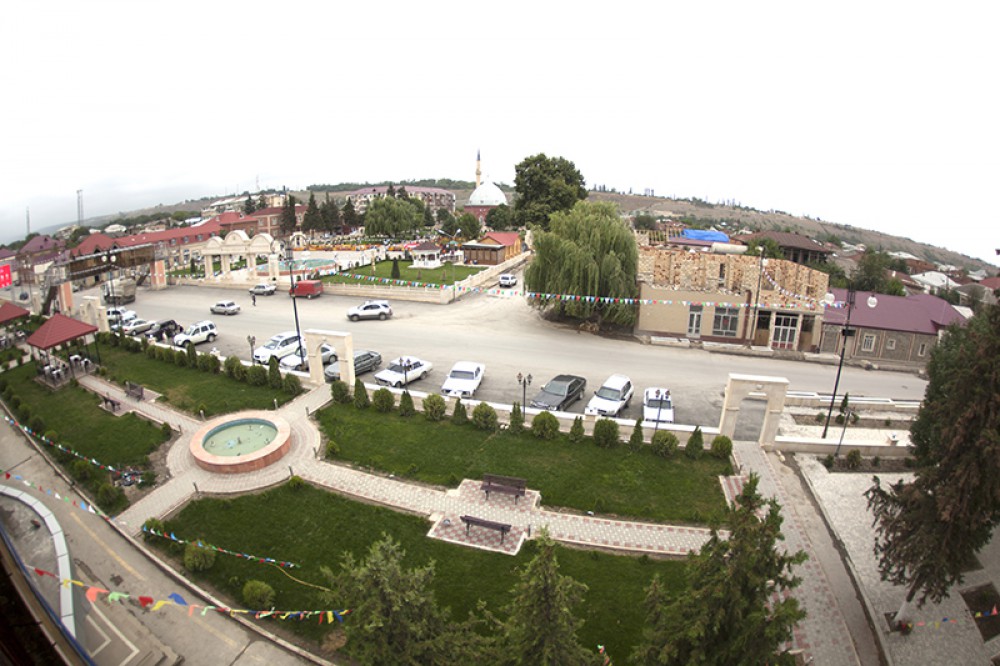 GUBA DISTRICT is one of the most developed agricultural regions of Azerbaijan. Fruits and vegetables grown here are exported to the capital's markets, processed at local canneries, and exported to other countries. Despite the large variety of fruits and vegetables grown in the Guba region, every Azerbaijani remembers his apple orchards when he says "Guba". People who sell apples in Baku markets praise their goods, emphasizing that it is definitely Guba's purchase. Guba region, which has a rich flora, is also represented by a wide range of medicinal plants. Hawthorn, juniper, pistachio, andyz, camellia, effedra and a number of other medicinal plants are grown here.
There are many picturesque corners around Guba. Qachrash, Balbulag, as well as the Tangaalti gorge with a depth of 400 to 600 meters are especially popular and attract more tourists.
The famous AFURCA WATERFALL on the Valvalachay River is included in the list of natural monuments of Azerbaijan and is protected by the state. There are other waterfalls that attract tourists and travelers with their uniqueness and uniqueness. There is a special taste of walking along these picturesque places along the tourist trails. As you ascend to the mountains, tall trees are replaced by bushes, and above - on the banks of the Khashichay River, thermal water flows from the rocks in the mountain gorge. Once upon a time, skilled craftsmen dug three holes directly in the rock, built their own baths and covered their edges with stone. Visitors can bathe in the healing hot water containing sulfur-hydrogen in these baths. According to experts, this natural stone bath enhances the healing effect of water.
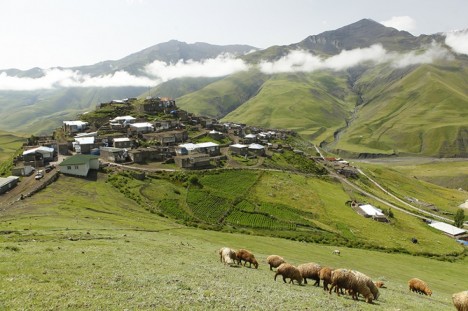
 The famous French writer Alexandre Dumas once visited these places when he traveled to Azerbaijan. He set up camp near the road to relax and have a snackThe people of Guba, who had camped nearby, invited him to their bonfires. He is very impressed by the skill of the people of Guba in slaughtering and cleaning the sheep and hosting Duma to the kebab. Norwegian scientist Tour Heyerdahl, who is considered to be the greatest traveler of our time, also visited Guba while visiting Azerbaijan. He believed that the "Assyrians" mentioned in the epic "Edda" were the ancient ancestors of the Azerbaijanis and went to the north of Europe during the great resettlement of peoples. The population of Khinalig village, located in the foothills of the high mountains (2,500 meters above sea level) in the Guba region, 65 km from Guba, is a unique ethnic group. The ancient language of the Khinaligs is unlike any other modern language in the world. The people of Khinalig also speak Azerbaijani, but have preserved their language.
There is a holy shrine near Khinalig. This shrine, which dates back to the 9th century, has a natural fire under the ground. That is why this place is called Ateshgah among the people. A unique ethnic group lives in the village of Budug. These people have a very rare language. An ancient building called a hut has survived. These towers, which date back to the Zoroastrian period and are popularly known as the "Tower of Silence", are designed for the burial of Zoroastrians.
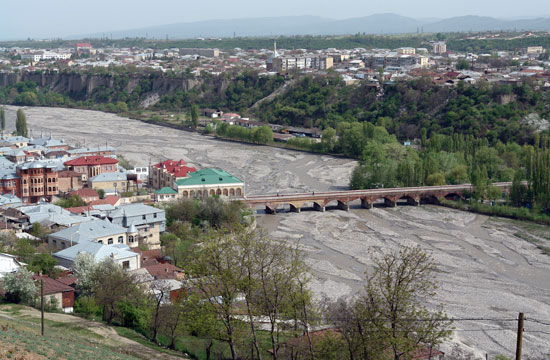
The city of Guba is located on the banks of the Gudyalchay River and on the north-eastern slopes of Shah Mountain, which is part of the Greater Caucasus Range. The distance from Baku is 168 km, the altitude is 600 meters above sea level. You can get detailed information about the history of Guba city and Guba khanate, the people who popularized this land in the local history museum. The house-museum of the famous Azerbaijani public figure, writer and educator Abbasgulu aga Bakikhanov is also here. One of Bakikhanov's books - "Gulustani-Iram" is dedicated to the history of Azerbaijan. In essence, this book is the first scientific work on the history of Azerbaijan. There is also a carpet weaving center in Guba.
"CHICHI", "SIRT CHICHI", "QIMIL", "JIMI", "YERFI" carpets woven in this zone are the decoration of a number of museums and private collections around the world.
 Historical monuments such as SAKINA MRS. MOSQUE, FRIDAY MOSQUE, 16th century mausoleum, ancient eastern baths are preserved in the city. In the first half of the 18th century, the territory of the present-day Guba, Devechi, Gusar, Khachmaz, Khizi and Siyazan districts was united in the form of the Guba khanate. Initially, the center of this khanate was the city of Khudat, but soon Guba khan Huseynali made Guba the center of his khanate and moved his residence to Guba. Fatali Khan, the most famous of the rulers of the Guba khanate, tried to unite the retail khanates of Azerbaijan under his leadership. He conquered all the north-eastern Azerbaijan from Derbent to Lankaran. At that time, Jews were invited to settle in Guba, on the left bank of the Gudyalchay. Formerly known as the Jewish Slobodas, the settlement has been called the Red Settlement since 1926.
Dagestan khans have always been a source of danger for Guba khanate from the north. When Russia began to show geopolitical interest in the Caucasus and the Caucasus, it became very difficult to protect the borders of the Guba khanate when it decided to establish its own rule here. And at the beginning of the 19th century (1813) the Guba khanate became part of the Russian Empire.
Guba is a small city, but the territory of the present-day Guba region, located on the north-eastern slopes of the Greater Caucasus, is extremely picturesque, and as soon as you leave the city, you will be immersed in this world of beauty. Both Azerbaijani and foreign tourists never ignore this region. Baku residents, especially those who come there in their cars to rest in Guba, often visit the recreation area on the Yalama coast from Guba, not far from Guba. Those who rest in Yalama (Nabran), in turn, do not miss the opportunity to relax on the shores of the Caspian Sea, the taste of the foothills of Guba, numerous springs and natural landscapes. Guba region is one of the most beautiful corners of our country. Its location near the capital, in the forest zone adjacent to the Caspian coast,
KHACHMAZ
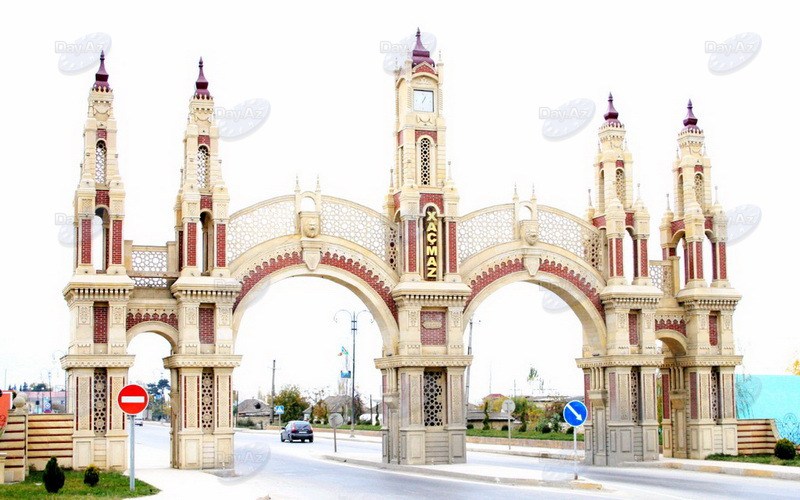 KHACHMAZ DISTRICT, which occupies part of the Samur-Shabran lowland, is located in the north-east of Azerbaijan and borders with Russia in the north. The main highway and the Baku-Moscow railway pass through the region. The climate of the region is temperate-hot, semi-desert and dry steppe climate. However, more than 20 hectares of land in the region are completely covered with forests. There are several rivers, 3 artificial lakes, numerous, including thermal and mineral springs.
There used to be a road on the border with Dagestan. The invading Scythian, Alan, and Hun tribes came and went this way. The Caspian defense fortification, which reaches the territory of the present Khachmaz region, was built for this purpose. One of the ancient cities and fortresses in the early 18th century was Khudat (the word means "tax of God"). It became the capital of Guba khanate. Groundwater resources are especially abundant near the town of Khudat. In 1914, a drinking water pipeline was laid from the village of Shollar to Baku.
Traces of Neolithic and Bronze Age human settlements were found in the whole territory of the region. According to scholars, the toponym "KHACHMAZ" is connected with the name of the Khachmatak or Khachmat tribes from the Hun tribes. Later, they mingled with the locals. It is interesting that one of these tribes moved from the territory of Khachmaz region to the present-day Oguz region, where they created the village of the same name Khachmaz, and then the Khachmaz fortress.
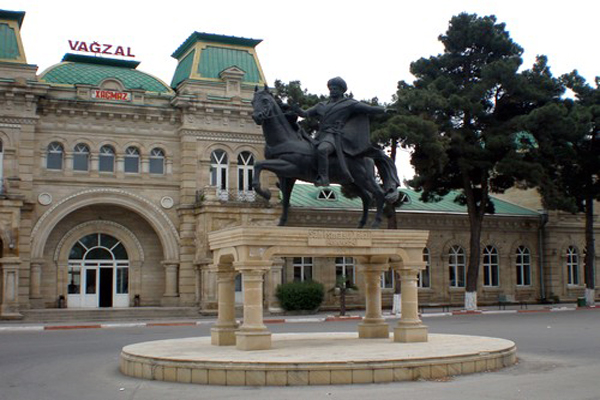 About 60 historical and cultural monuments have survived in this region. However, archaeologists believe that the number of such monuments should be many times higher, because the region has been densely populated since ancient times. Bronze Age human settlements were discovered near the villages of Molla Burhan, Hulovlu, Garajig, Hasangala, and medieval human settlements near the villages of Kurganlar, Canakhir and Bostanchi. Sheikh Yusif Mosque (15th century) in Shikhlar village belongs to the first periods of architectural-mausoleum complexes. Later, in the 16th and 17th centuries, such complexes became more widespread. Mosques of the 19th century in Morugoba, Tagaroba, Uzunoba villages, mosques and madrasas of the 15th century in Garagortlu village have survived.
The administrative center of Khachmaz region is Khachmaz city. Its distance from Baku is 157 km. A special faculty was opened here at the local lyceum, as carpet weaving is more developed than traditional folk arts. Visitors often come here to see how young masters weave wonderful carpet patterns with their delicate fingers. The patterns of these carpets have been passed down from generation to generation and have been preserved for centuries.
Visitors to Khachmaz can stay at the Elite N Hotel. In the territory of Khachmaz region there is a recreation area, which is the second largest in the country in terms of size and landscaping. There are many tourist bases and boarding houses in this recreation area, which stretches along the shores of the Caspian Sea from Mukhtadir settlement to Nabran settlement and a little further away.
NABRAN
Nabran-Khachmaz region is the largest creative region located on the shores of the Caspian Sea. An interesting feature of this zone is that the forest begins immediately after the sandy beach in a small area. Various tourist bases, camps, boarding houses, rest houses are located in the forest. Their conditions are very diverse - from "luxury" comfortable hotels, well-appointed cottages for several people to tent camps.
QUSAR
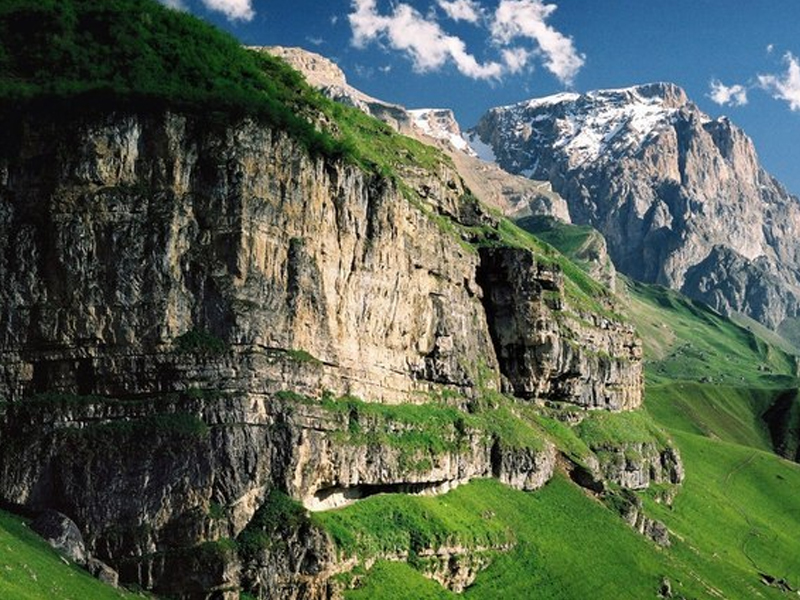 The district center is the city of Gusar. Gusar region, which borders Dagestan, is located in the north-east of Azerbaijan, 35 km from the Khudat railway station. The name of the region comes from the name of the "Gusar " tribe, which once lived in this area and later disappeared as a result of historical ethnogenesis. Today, the region is mainly inhabited by Lezgi people.
The landscape of this region is marked by the alternation of forested mountains and valleys. Broad-leaved trees - hornbeam, oak, beech - are more common here. Tugay forests in the tea fields grow asgil, sumac, hawthorn, hips, wild fruit trees, wild grapes, and various types of medicinal plants. Here, the birch forest (area 7 hectares) called "ALISTAN BABA FOREST" is protected by the state. The fauna of Gusar region is also rich. Wolves, bears, wild boars, mountain goats, eagles, owls and other birds and animals live here. In order to preserve the fauna of hunting and hunting industries and restore their population, the "Gusar" reserve was established (area 15 thousand hectares).
There are beautiful waterfalls in the mountain valleys. The most popular of them are Laza and Shahnabaz waterfalls, which attract tourists and lovers of wildlife of the Caucasus. Mountains and peaks of Gusar region attract climbers. In recent years, local waterfalls have become a racetrack for athletes who like to climb icy mountains in winter. You can walk from Laza village to Khinalig village of Guba region. Recently, hiking enthusiasts prefer this route.
Pedestrians on foot from Gusar to Laza Waterfall on the eco-tourism route can camp in the village of Anik. Remains of 13th century castle walls and an ancient mosque building near this village are in good condition. Near the village of Laza you can stay in the recreation center "SUVAR".
The length of the route from Gusar to SUDUQ village is 75 km. On the slopes of Shah Mountain, in the village of Hazra, you can see the mausoleum of Sheikh Junaydan (16th century), the grandfather of the founder of the Azerbaijani Safavid state, Shah Ismail Khatai.
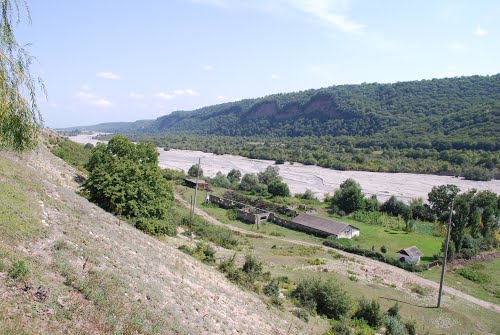 Evidence of the ancient culture and way of life of this people can be seen in the land of Gusar, as in the whole land of Azerbaijan. Ancient mausoleums, mosques, remains of ancient human settlements and fortresses have been preserved in the villages of Hazra, Hil, Balagusar, Anik, Yasab, Old Khudat, Gunduz.
The administrative center of Gusar region is Gusar city, 183 km from Baku. The great Russian poet Lermontov once visited this city. Now a museum named after him has been established here.
The most widespread type of folk art in Gusar is carpet weaving. Pileless SUMAX carpets woven both at home and in a workshop in the city center are more popular. The largest carpet machine in the country has been installed in this workshop. Up to 10 carpet weavers can work on the same machine at the same time.
Gusar region attracts tourists not only to Azerbaijan as a functional ski tourism complex, but also to the natural wonders, culture and traditions of the people living here. The pearl of the entire tourism industry of Azerbaijan, the complex of winter and spring sports facilities "Shahdag" is located on the mountain slopes, 2544 m above sea level. The existing hotels here are located at an altitude of 1640 m: "Peak Palace Shahdag", "Park Chalet, Shahdag", "Zirve Hotel Shahdag" and "Shahdag Hotel & Spa", but not the last for these places. If you have a perfect driver, you can see the highest mountain tourism center in Azerbaijan - the recreation area "Suvar". This is Suvar, located at an altitude of 1850 m above sea level. Near the complex there are beautiful waterfalls - Laza and Shahnabat twin waterfalls - located at an altitude of 2000 m. Local waterfalls have one characteristic - it is very convenient to hold winter competitions here, because they do not freeze in winter.


কোন মন্তব্য নেই:
একটি মন্তব্য পোস্ট করুন