The historical lands of Azerbaijan, inhabited by the ancestors of our people, were part of the Caspian-Mediterranean- Persian Gulf region, where the most ancient civilization began to flourish .
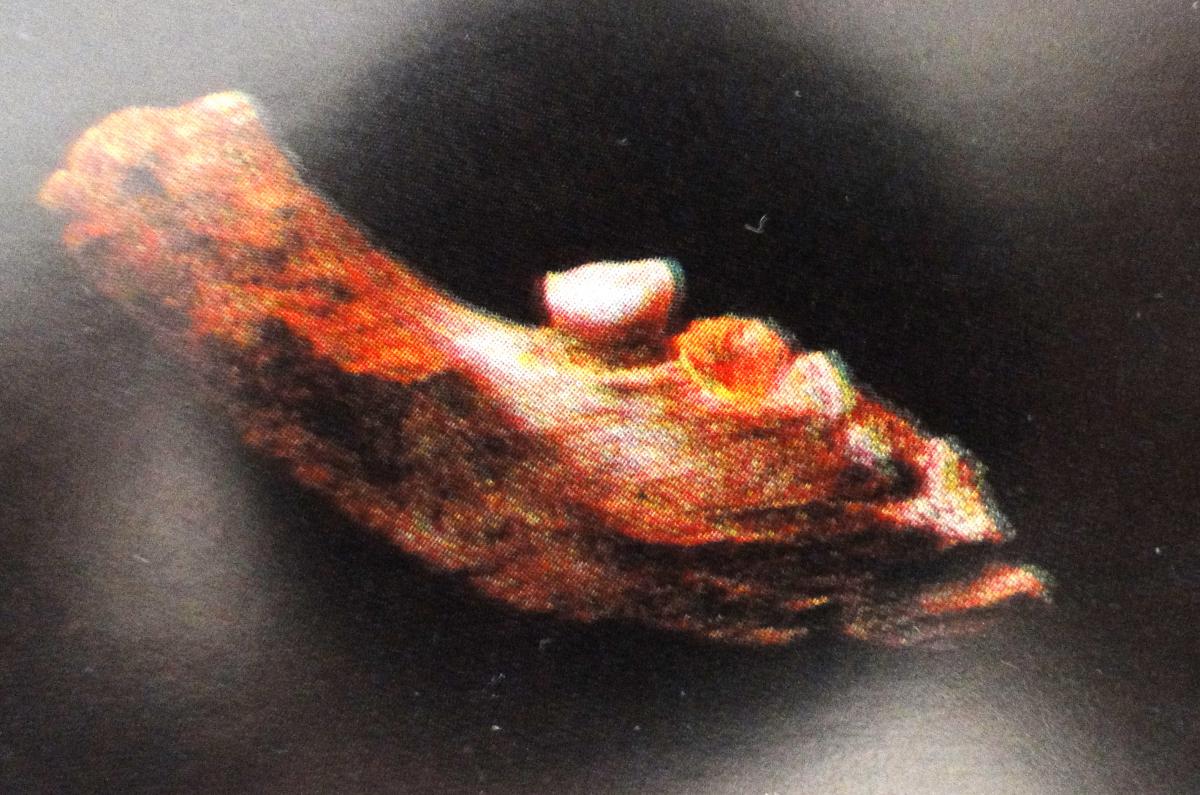
The ancient ethnic groups that took part in the formation of the Azerbaijani people played a very important role in the formation of the ancient cultural environment in the region, including the Sumerian-Babylonian culture, as well as in the military and political life of the Middle East. This is clearly proved by scientific research in our country and abroad, especially archeological excavations.
The territory of Azerbaijan is extremely rich in archeological monuments, proving that this land is one of the oldest human settlements in the world. Archaeological finds found in the caves of Azykh, Taglar, Damjili, Dashsalahli, Gazma (Nakhchivan), as well as other monuments, including the jawbone of an ancient man of the Ashol period - Azykh man (Azykhantrop) who lived 300-400 thousand years ago proves that included.
Due to this unique discovery, the territory of Azerbaijan was included in the map of "the oldest inhabitants of Europe".
The population of Azerbaijan, one of the oldest human settlements in the world, has created a high culture since the ancient Stone Age (Paleolithic). In the Middle Stone Age (Mesolithic) and New Stone Age (Neolithic), the population of Azerbaijan settled down and began to engage in agriculture, cattle breeding and various fields of art. The sphere of influence of cultural and economic progress in the territory of Azerbaijan was expanding. BC The Kur-Araz culture, which was formed in the late 4th and 3rd millennia, spread to other regions of the South Caucasus, Eastern Anatolia and the North Caucasus.
Rich samples of material culture found during archeological excavations, especially grain remains, agricultural tools and household appliances, various types of handicrafts show that the Azerbaijani people are one of the oldest sedentary peoples in the world.
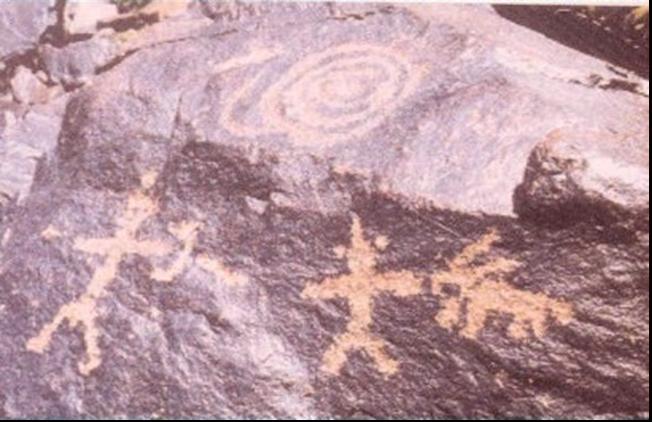 At the same time, the people of Azerbaijan are one of the world's oldest traditions of statehood. The people of Azerbaijan have a history of statehood of about 5,000 years. The first state institutions or ethno-political associations in the territory of Azerbaijan were formed in the Urmia basin from the end of the 4th millennium BC to the beginning of the 3rd millennium BC. The oldest Azerbaijani states formed here played an important role in the military-political history of the whole region. At that time, Azerbaijan had close relations between the ancient Sumerian, Akkard and Assyrian (Assyrian) states, located in the Tigris and Euphrates valleys and leaving a deep mark on world history, as well as the Hittite state in Asia Minor.
From the point of view of active foreign policy, the oldest Azerbaijani states successfully defended their lands from foreign aggression. The Gutis, an ancient tribal group of Azerbaijan, even defeated their powerful neighbor, the Akkadian state, extended the borders of their states to the Persian Gulf, and ruled the area for up to a hundred years. Just as they benefited from the rules of governance of Akkard and Sumer, which they had made dependent on them, they also spread to those countries the progressive administrative culture of ancient Azerbaijan.
Starting around Urmia, the ancient Azerbaijani state institutions Lullubi and Guti, which from time to time dominated the territories from the Tigris and Euphrates valleys to the Persian Gulf, left a deep mark not only on the history of Azerbaijan, but also on the history of ancient Eastern statehood.
Unlike other ancient Eastern states in the neighborhood, there was a rule of electing rulers in boxes. Power was not inherited. The Kuti rulers ruled the country through their successors. The deputies had a wide range of administrative independence. Apparently, all this played a significant role in the long rule of the ancient Azerbaijani states over large areas, including the Tigris and Euphrates valleys, up to the Persian Gulf.
Over time, the culture of statehood in Azerbaijan has risen, new states have emerged in the country, which are more developed and cover a wider area.
In the first millennium BC - at the beginning of the first millennium AD, such powerful states as Manna, the Scythian (Scythian, Scythian) kingdom, Atropatena and Albania existed in the lands of Azerbaijan. These states have played an important role in further enhancing the culture of public administration in Azerbaijan, in the economic and cultural history of the country, as well as in the process of forming a single nation.
The Manna state, which is a continuation of the traditional Azerbaijani statehood and emerged in the early first millennium BC, was an important stage in the history of Azerbaijani statehood. Founded in the Urmia Basin, the oldest place of statehood in Azerbaijan, this state occupies an important place in the history of world culture of statehood not only because of its antiquity, but also because of its degree of evolution.
Lake basin under its own power other small local states in the north, connecting Manna ̶ river (sometimes also to the north of it) and the north-east ̶ to the Caspian Sea, which covered the territory of Azerbaijan.
Manna was closely involved in military and political events in the whole region, successfully fighting against its powerful neighbors - the Assyrian and Urartian states , trying to seize the lands of Azerbaijan . The Scythians and Kimmers, who settled in Azerbaijan at that time, also took an active part in the struggle against the Assyrian and Urartian invasions.
The rulers of Manna had inherited and unlimited power. Nevertheless, they ruled the country with the help of a council of elders, which proves that Azerbaijan has an ancient culture of consultation in public administration.
Manna, which lasted for almost three hundred years in the southern regions of our country and withstood the incessant attacks of powerful neighbors, is a very valuable historical fact that proves the existence of strong traditions of statehood in Azerbaijan since ancient times.
From the end of the VIII century to the beginning of the VII century BC, the Cimmerians and Scythians, as well as the Saks and Massagets from the same community as the Scythians, began to play an important role in the military-political history of Azerbaijan. These tribes, ancient inhabitants of Eurasia and flowing south from the southern passes of the Main Caucasus and the Derbent Pass in different historical periods, after consolidating in the southern foothills of the Greater Caucasus - Northern Azerbaijan, spread to the south - Manna and eastern Anatolia.
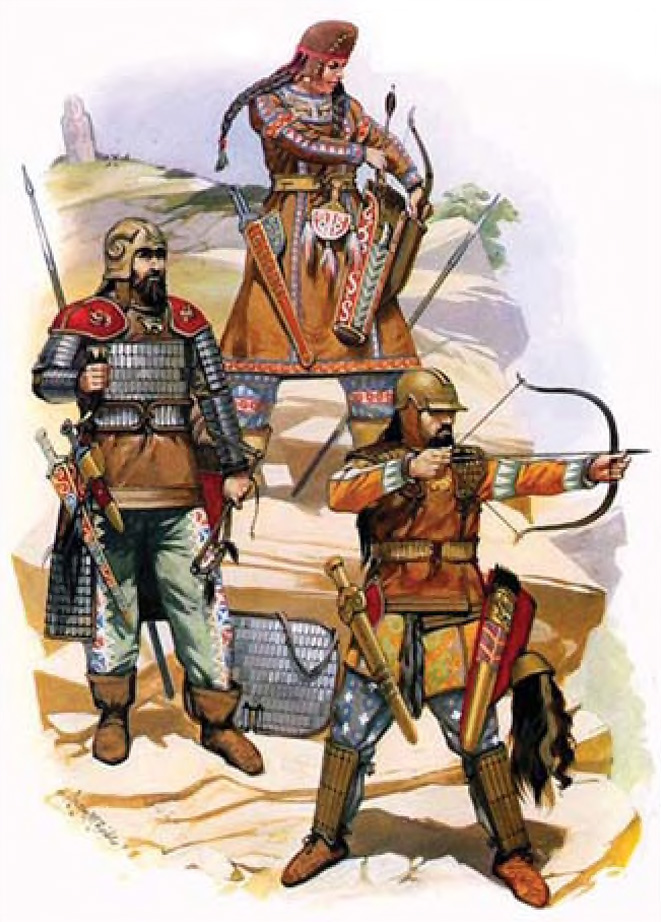 The Kimmer-Scythian-Sak community included strong Turkic communities as well as tribes of other origins. Herodotus, the "father of history" (fifth century BC), based on his own observations, also proves this. According to Herodotus, the Scythians were fed on horse milk; Massagets, related to the Scythians, dressed like them and lived like them. They worshiped the only god, the sun-god, and the fastest living creature on earth, the sun-god.
The Scythians established a powerful Scythian kingdom in the lands of Azerbaijan north of Manna and took part in the process of forming a single nation in the country. The rulers of Scythia-Massaget also successfully defended the Azerbaijani lands in their foreign aggression.
The Massaget kingdom severely defeated the Iran-Achaemenid Empire, one of the most powerful empires of the time. After the conquest of the southern lands of Azerbaijan, Cyrus II, the Achaemenid ruler who carried out large-scale invasions in the Middle East, tried to seize the north of our country and for this purpose proposed to Tomiris, the widow of the ruler of Massaget. However, Tomiris, who understood the trick of Cyrus II, glorified the honor of the homeland and the independence of the country, rejected the offer of the ruler of Iran. It was destroyed in 530. "Invincible" Cyrus himself was killed in this battle. By eliminating such powerful states as the Median Empire, Lydia, and Babylonia, including the Parthian lands,
During the Scythian dynasty, favorable conditions were created for the interaction between Azerbaijani culture and Scythian culture, which spread over a wide area of Eurasia. Ancient Azerbaijani culture developed and enriched. Samples of material culture discovered during archeological excavations, as well as many place names from the Scythian-Sak-Massaget period in the territories of Azerbaijan are vivid evidence of this.
Despite the complex military and political events in the Middle East, the policy of neighboring countries to seize Azerbaijani lands, which are very rich in natural resources and of great military-strategic importance, our statehood traditions continued and enriched. Therefore, neither the protracted occupation regime of the Achaemenid-Iranian Empire, nor the marches of Alexander the Great could destroy the ancient culture of public administration in Azerbaijan.
Immediately after the death of Alexander the Great, the Azerbaijani statehood was revived. Atropatena was formed in the south of our country, and Albania in the north. All the historical lands of Azerbaijan were concentrated in these two local states.
The state of Atropatena covered the southern part of the country. The revival of the independent Azerbaijani statehood here, in fact, took place long before Alexander's march. The southern lands of Azerbaijan, which had become a separate satrapy along with other territories of the collapsed former Median empire, were ruled independently by the Achaemenid satrap Atropat during the reign of the Achaemenids. This part of Azerbaijan was then called Media-Atropatena, Little Media and Atropat Media, and sometimes Atropatia or Atropatena.
Atropat III, a far-sighted politician and famous commander, led the main strike force of the Achaemenid army against Darius Alexander. These forces consisted mainly of military units gathered from the northern and southern lands of Azerbaijan. After defeating Darius III, Alexander, aware of Atropat's commanding talent and military-political prestige, was reluctant to confront him and preferred to approach the ruler of Azerbaijan. Thus, the occupation of Alexander the Great bypassed Azerbaijan. Later, Atropat deepened this rapprochement with the Macedonian ruler and became related to one of his closest associates, and finally, for the first time in the entire East, he transformed his homeland, Atropatena, into the first independent state free from Greek-Macedonian dependence.
The revival of the traditions of independent statehood has led to a great rise in all spheres of economic and cultural life in the southern regions of Azerbaijan. The mighty state of Atropatena played an important role in the international relations of the whole region, maintaining extensive trade relations with the Caucasus, the Volga region, Central Asia, India, Asia Minor, Mesopotamia, the Black Sea and the Mediterranean. The state's own money played an important role in domestic trade.
The interaction and influence between the Eastern and Greek state systems also had a positive effect on the rise of the culture of governance in Atropatena. The widespread use of the Greek language in the country, among other things, led to the improvement of legal norms. The rules of public administration were further improved.
The rulers of Atropatena, benefiting from the traditions of government in Azerbaijan, as well as in the ancient East and Greece, were able to further strengthen their power. As a result, Atropatena was able to maintain its independence in the struggle against the Parthian and Seleucid states, and defeated the Roman troops who had invaded the country, joining the Parthians. At that time, Atropatena's troops were considered one of the strongest western forces in the region. Atropatena sent 40,000 infantry and 10,000 cavalry to fight the Roman invaders.
Extensive relations were established between the state of Atropatena, a very important military and political force in the Middle East, and the Roman Empire. The Roman Empire attached special importance to Atropatena in its eastern policy. The envoys of Atropatena went to Rome and held diplomatic talks with the emperor Octavian Augustus (27 BC - 14 AD). The Roman emperor also entrusted the rule of the neighboring Armenian kingdom in Asia Minor to the rulers of Atropatena. Fearing Atropatena's military-political power, the Armenian tsars tried to disrupt relations with this state. For this purpose, the Armenian king Tigran gave his daughter to Mithridates, the ruler of Atropatena. Later, the Armenian kingdom became dependent on Atropatena and was ruled by the rulers of Atropatena.
North of the country in the Albanian state borders Dagestan, south (Derbent and with their combined), including the Caucasus Mountains from the south ̶ to the Araz River, west of the Sevan Lake basin, Gabirri (Iori) (Alazan) rivers from the east - It covered the lands of Azerbaijan extending to the Caspian Sea. The capital of this powerful Azerbaijani state was first Gabala and then Barda (after the 5th century).
During the Albanian period, material and spiritual culture was further developed in the northern lands of Azerbaijan. During this period, the Azerbaijani alphabet, called the Albanian alphabet, was created in scientific literature, and schools were opened. There were more than 30 cities in the country, which were important centers of trade and crafts.
Located at the crossroads of North and South, East and West, where different ethnic groups, religions and cultures came into contact, a unique and rich culture was being formed.
Turkic ethnic groups living in the country and growing in number have played an important role in the life of the state. Along with the worship of the moon, the sky, the sun, and God alone, Christianity was spreading. The independent Albanian Church was religiously directly subordinate to Rome.
During the Albanian period, the culture of public administration in Azerbaijan was even higher. Albanian rulers were the country's secular and religious leaders. At the same time, they gave laws and led the country's military. The state's military forces exceeded 80,000 people (60,000 infantry, 22,000 cavalry).
There was an advisory council in the palace of the Albanian rulers. 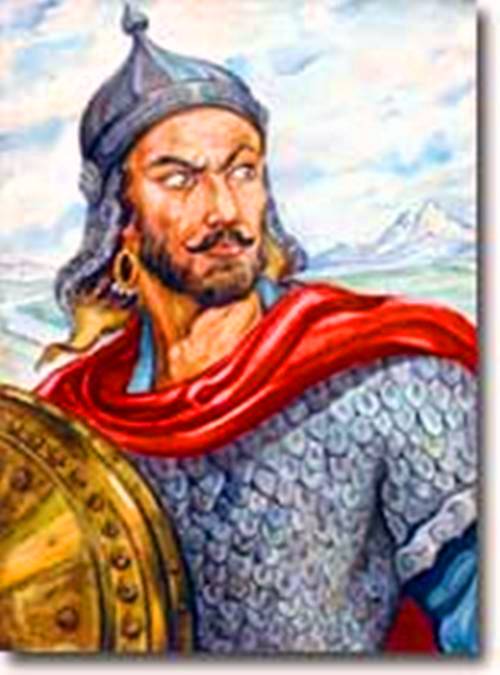 The Albanian rulers themselves presided over the council and the clergy. Like Atropatena, the Albanian state had its own money. The Albanian state, which had a strong and perfect system of government for its time, successfully fought against Parthia and the Roman Empire, which threatened the country's independence. The invading armies of the Roman Empire were repeatedly severely defeated by Albanian knights. The Roman Empire was forced to reckon with Albania's military-political power, and relations between the two countries were established. Like Atropatena, the Albanian ambassadors went to Rome and held talks with Emperor Octavian Augustus.
The country also had extensive trade and political relations with other countries.
The ruler of Albania, a prominent statesman, Javanshir, pursued a wise, far-sighted and agile foreign policy against powerful neighbors such as the Byzantine, Sassanid, Caliphate and Caspian empires, who tried to capture the country.
The
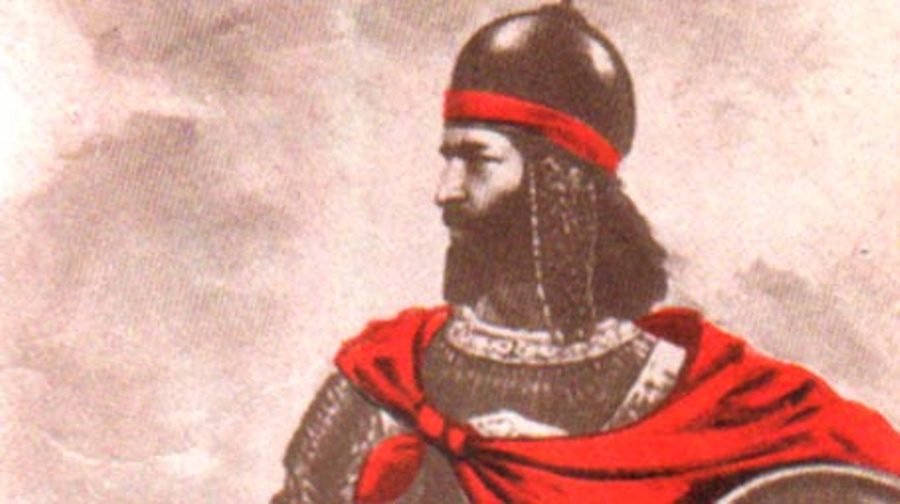
heroism of such commanders as Javanshir and Babek
became a great school of patriotism ,
embodied the integrity of the Motherland and the unity of the people.
Heydar Aliyev
Albania, which had significant military, political and cultural influence in the Middle East and close relations with the countries of the region, maintained extensive relations with the countries of the Mediterranean, including the Roman Empire. The first sources, including the rich material culture discovered during archeological excavations, prove that during the Albanian period, the northern lands of Azerbaijan maintained extensive relations with foreign countries. The passage of Albanian international roads connecting the Near and Middle East with the Caspian Khaganate and Eastern Europe had a positive effect on the country's foreign trade relations.
At the beginning of our era, our country faced one of the most difficult periods in its history: in the 3rd century, Azerbaijan was occupied by the Sassanid-Iranian Empire, and in the 7th century by the Arab Caliphate. The invaders brought in a large number of people of Iranian and Arab origin from Iran and Arabia.
The newcomers were settled in areas of significant military-strategic importance and in the most fertile lands. They were given extensive privileges. The foreigners began to pursue a policy of dissolving and destroying the local population of Azerbaijan. However, nearly 600 years of Iranian and Arab oppression did not destroy Azerbaijan's ancient statehood traditions. The process of formation of the Azerbaijani people continued in the conditions of intolerable occupation and persecution.
Despite the policy of the occupiers to assimilate the local population, as a result of the long history of Azerbaijan as a whole being part of the empire, internal relations, first of all, trade relations between all regions of the country expanded. Significant progress has been made in establishing ethno-political and cultural unity between the northern and southern, eastern and western regions of Azerbaijan. It had a positive effect on the long-running alliance against the Iranian and Arab aggressors. The process of creating a united nation has accelerated.
In the first centuries of our era, the Turkic ethnic groups, which make up the majority of the country's population and are more militarily organized and stronger, played an important role in the formation of a single nation. Among the Turkic ethnoses, the Oghuz Turks dominated.
The first Oghuzs, like other Turkic tribes, entered the South Caucasus, which is part of the all-Turkic space, including Azerbaijan through the Derbent Pass, which the ancient Turks called the "Iron Gate", as well as other mountain passes in the Greater Caucasus (Gakh region of Azerbaijan). called beli ̶ YM) were spread through. According to the first sources, the tomb of the Oghuz saint Dada Gorgud was in Derbent, and one of the gates of Derbent was named "Bayat Gate" after the Bayat people (Oghuz tribe Bayats) to which Dada Gorgud belonged.
The ancient Turks, including the Oghuzs, who settled in large areas of Eurasia, always tried to keep in their hands this important passage - the "Iron Gate", which connects the north and south of the all-Turkic space, ie the Kipchak plain and the South Caucasus.
Along with other primary sources, the facts given in the Oghuz script called "Kitabi-Diyarbakiriya" written by Abu Bakr al-Tehrani al-Isfahani under the rule of the most powerful ruler of the Oghuz Turks, Uzun Hasan (1454-1478), are in the ancestral roots of the Oghuz Turks, including our people. proves that the Karakoyunlus are one of the oldest inhabitants of Azerbaijan, as well as the South Caucasus and Central Asia as a whole. The mentioned author researches the genealogy of Uzun Hasan's great grandfather - the founder of the Aghgoyunlu state Gara Yuluk Osman bey one by one and finally conveys it to Oguz khagan. It enumerates the territories that were part of the great Turkic state led by Oguz Khagan and shows that this great ruler, ie Oguz Khagan, who was at the root of all Oghuz Turks, died around the Goycha Sea.
Dada Gorgud, the author of "Kitabi-Diyabakriya", writes that Oguz's grandson Khanlar khan Bayandir khagan "lived in the Karabakh winter and Goycha sea pastures", where he "convened a great congress and accepted the invitation of God after dividing his country among his sons". Abu Bakr al-Tehrani al-Isfahani confirmed that Sungur bey, the 20th grandfather of Qara Yuluk Osman bey from Aghkoyun, was a contemporary of the Prophet Muhammad. He "fought the infidels" on the borders of the Alagoz and Goycha seas, and was killed in one of the battles. Kara Yuluk Osman bey's 14th grandfather Shaktur khan showed heroism in the battles for Alinja fortress and took it back from the "infidels". Kipchak khan, a contemporary of Caliph Harun al-Rashid, also called the infidels "Alinja" for the fortress.
All these facts, which echo the "Kitabi-Dada Gorgud" and coincide with the events that took place during the time of the Prophet Muhammad and the occupation of the Caliphate, are not only a historical reality, but also prove that Azerbaijan has preserved its strong traditions of statehood and independence.
Turkic tribes, unlike other peoples and ethnic groups, spread throughout the territory of Azerbaijan - both north and south - and formed a majority. Therefore, starting from the first centuries of our era, the Turkish language was becoming the main means of communication between the small number of peoples and ethnic groups living in the territory of Azerbaijan. The Turkish language also played a unifying role between north and south. This factor played a very important role in the process of forming a single nation at that time. Because at the time in question, there was no single religious community covering the entire territory of Azerbaijan - a monotheistic religion. Worship of God, the chief deity of the ancient Turks, had not yet completely suppressed other religious beliefs. Zoroastrianism, fire-worship, Sun, Moon, Sky, stars, earth, water, etc. worship was in progress. In the north of the country, in some parts of Albania, mainly in the mountainous western regions, Christianity was spreading. However, the independent Albanian Church operated under fierce competition from neighboring Armenian and Georgian churches.
Numerous Turkic ethnic groups, which became a strong and leading military-political force in these complex historical conditions, were the main carriers of the Azerbaijani statehood. At a time when there was no single monotheistic religion, it was the Turkic ethnoses and the Turkish language that played a unifying role in the north-south, throughout the country. Turkic ethnic groups also played a leading role in preserving the Azerbaijani statehood and the country's traditions of independence.


কোন মন্তব্য নেই:
একটি মন্তব্য পোস্ট করুন