BAKU TOURISM ZONE
If the image of Azerbaijan on the map looks like a bird flying towards the sea, its "beak" is the ASHBERON PENINSULA. The capital of Azerbaijan, the ancient and ever-young city of Baku, is located on the southwest coast of the peninsula . 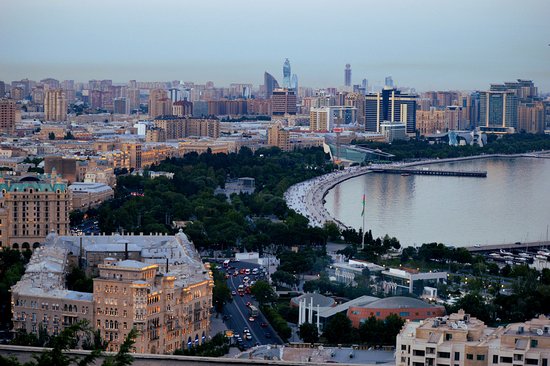
The city has a population of about 2 million. Despite the fact that Baku is administratively separated from the settlements of Absheron (there are 32 of them), historically these settlements are united with the capital, both culturally and economically, as well as spatially. That is why the whole Absheron peninsula together with the capital is called "Greater Baku".
Absheron and Baku have the main transport arteries of the republic - HEYDAR ALIYEV INTERNATIONAL AIRPORT, a large seaport in Baku Bay (by the way, this port is the largest port in the entire Caspian Sea), a railway station in Baku and highways connecting the capital with the regions.
The main oil and gas pipelines also start here, in Absheron. Baku is the main point of the TRASECA (Europe-Caucasus-Asia) international transport corridor. Within the framework of this project, Azerbaijan participates in the restoration of the historic Great Silk Road.
CLIMATE. The Absheron Peninsula is located 28 meters below world level. The climate of Baku and Absheron is temperate, semi-desert and steppe, with winds typical only of Absheron. The so-called "Khazri" north wind cools the air in summer and is extremely cold in winter. The south wind called "GILAVAR" brings warmth in summer and moderate cold in winter. In general, the climate of modern Baku has become much milder thanks to the gardens and parks that Baku residents love to cultivate. In the early twentieth century, strong winds and dust made it impossible to walk the streets of Baku, and today Baku has become a city distinguished by a warm and comfortable lifestyle.
MINERALS. The Absheron Peninsula has oil, gas, construction stone (limestone called "almond"), salt, sand and limestone deposits. Masazir, Gala, Boyuk Shor, Khoja Hasan salt lakes in Absheron are very popular. Some of the oldest oil wells in the world are located in Absheron. In the past, people extracted oil from these wells with buckets. Here are some of the first wells for industrial oil production.
Azerbaijan ranks first in the world for the number and diversity of MUD VOLCANES, which are considered to be the most beautiful mysteries of nature. Of the 800 known mud volcanoes in the world, 400 are located in the southern Caspian oil and gas basin, including more than 300 on land in Azerbaijan and in the Caspian Sea - at sea and on numerous islands.
All different types of mud volcanoes in the world are represented in Azerbaijan. It is no exaggeration to call this land a natural reservoir and laboratory of mud volcanism. Therefore, in recent years, international scientific forums on volcanism, geodynamics and seismicity are held in Baku.
Mud volcanoes are attracting more and more tourists to our country. The steppe and rocky landscape of Absheron, its volcanoes are reminiscent of the youth of our planet. At that time, there were no humans on Earth, nor were there lunar landscapes. But Azerbaijani volcanoes are alive, they breathe…
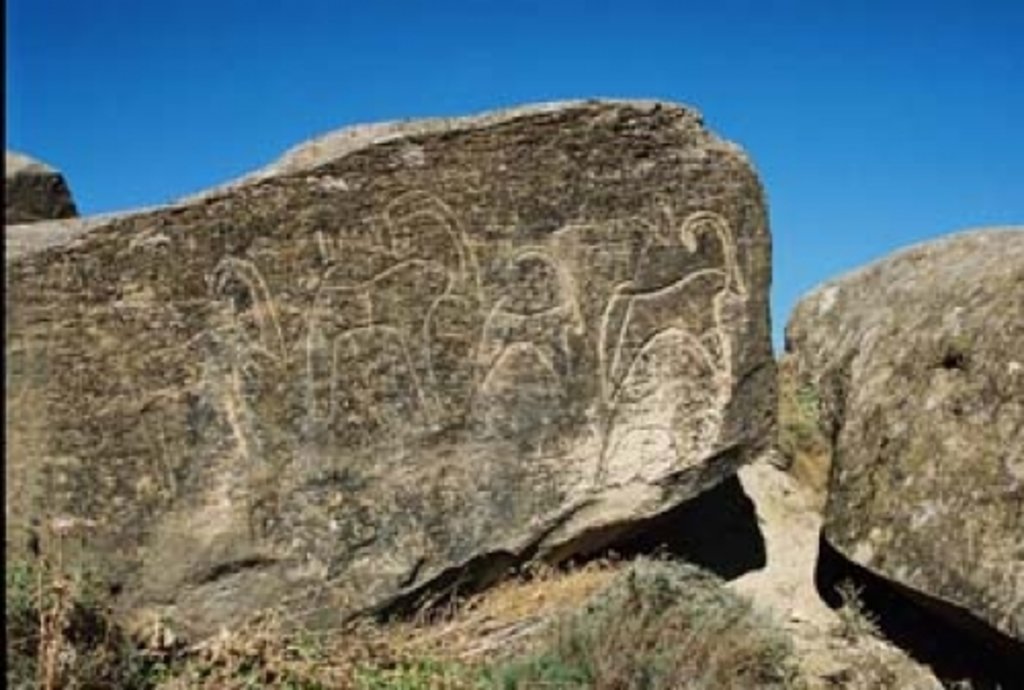 GOBUSTAN PETROGLIFTS - AN OPEN MUSEUM. Petroglyphs, that is, rock paintings, are the artistic "archive" of human evolution on the planet Earth. The "documents" of such archives are like the first time a person broadcasts his identity to the world around him. There are several such open-air "archives" in Azerbaijan. One of them, and probably the largest, is located in GOBUSTAN - BAKU STATE HISTORICAL-ETHNOGRAPHIC AND ARTISTIC RESERVE near Baku. Located in the south-eastern foothills of the Greater Caucasus Mountains, this rocky massif is located near the Caspian Sea, on a modern highway along the ancient Shirvan road. Numerous rock carvings, ancient human settlements under the rocks and burial mounds have been discovered here. Two archaeologists who devoted 35 years of their lives to the study of Gobustan - D. Rustamov and his wife F.Muradova believe that the oldest part of Gobustan petroglyphs is a very informative picture of life, despite the simplicity of the most optimistic and self-expression of man in the early days of human development. They explored about 20 rock-bottom settlements, excavated about 40 mounds, and discovered 300 new rocks and stones with images on them. However, Gobustan rocks are not the only witnesses of the most ancient period of human life. These rocks reflect the 15,000-year history of the region - a large period of time from the Upper Paleolithic to the Middle Ages. They explored about 20 rock-bottom settlements, excavated about 40 mounds, and discovered 300 new rocks and stones with images on them. However, Gobustan rocks are not the only witnesses of the most ancient period of human life. These rocks reflect the 15,000-year history of the region - a large period of time from the Upper Paleolithic to the Middle Ages. They explored about 20 rock-bottom settlements, excavated about 40 mounds, and discovered 300 new rocks and stones with images on them. However, Gobustan rocks are not the only witnesses of the most ancient period of human life. These rocks reflect the 15,000-year history of the region - a large period of time from the Upper Paleolithic to the Middle Ages.
Archaeologist Ishaq Jafarzadeh, the first researcher of Gobustan, first informed the world science about these unique places in 1939.
Today, more than 4,000 petroglyphs (rock paintings based on stone carving techniques) have been found in Gobustan. These paintings include animals and fishing, domestic scenes, group dances, various, including solar symbols (swastikas, spirals, crosses), constellations, men and women (interestingly, at that time women went hunting with men), gazelles, mountain goats, There are images of animals such as lions and goats, a cane boat, two-wheeled carts and human prints. In Gobustan, unusual "vessels" - hollows carved on stone and even decorated with patterns - have survived. There are also unusual "instruments" - stones that make loud noises. Because each stone has its own timbre, they are called "QAVAL DASH".
There are also signs on the rocks of Gobustan confirming the presence of Roman legionaries here in the first century AD. This region, which was attractive for occupation, did not escape the attention of the Romans. One of the rocks here is inscribed in Latin by the Roman centurions of the 11th Lightning Legion. The article states that Emperor Domitian Caesar Augustus was in German rule in Rome at the time. In 2007, Gobustan was included in the UNESCO World Heritage List.
HISTORY OF ASHBERON. Due to the geographical, climatic and geological factors of Absheron, the entire Absheron Peninsula and the territory of Baku were settled 20,000 years ago. (Near Yeni Surakhani settlement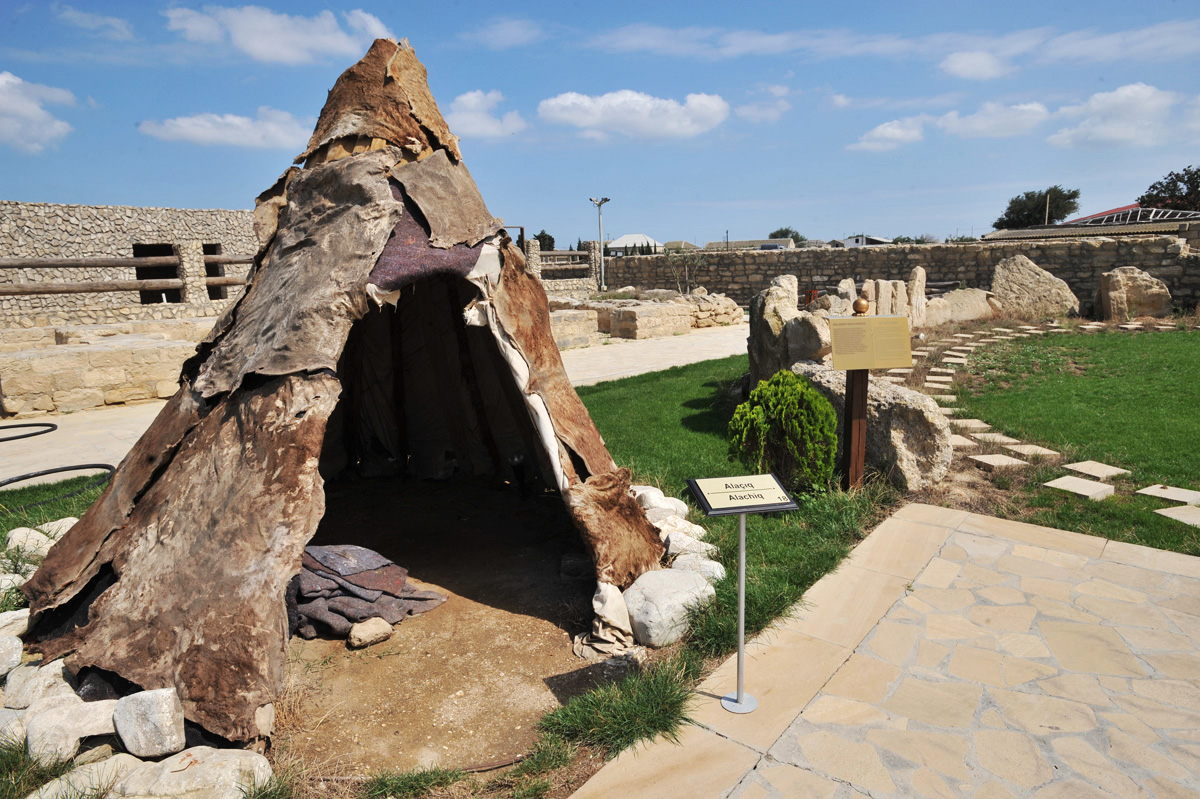 ancient human settlements have been discovered.). In general, there are countless ancient human settlements on the peninsula, including Bronze Age and Early Iron Age mounds. Ancient cemetery complexes with anthropomorphic figures carved out of stone and painted with subject paintings were also found here (Dubandi, Turkan, Khashakhuna, Mardakan, Shuvalan settlements). It is impossible to come across such complexes in any other region of Azerbaijan and the Caucasus. Ancient human settlements have been discovered on Pirallahi Island, Lake Zykh, Binagadi and Amirjan (III-I millennia BC). All this shows that the Absheron Peninsula as a whole has been attracting people to live in peace since ancient times. However, the geostrategic position of this peninsula also attracted various invaders.
The largest settlement in Absheron is Mashtaga village. In addition to the remains of human settlements of the Bronze Age and Iron Age, there are also monuments of a relatively later period: BIRA ARBUTAY Mosque (1414), KHOJA AYDAMIR Mosque, GAZIKHANA, KHOJA KARBALAYI HUSEYN MOSQUE built in the XVIII century, XIII century, XIII century a mosque with a minaret 40 m high, a 17th-century HAMAM, OVDAN (sututar, 19th century); Tombs of AQIL BABA, KHOJA ASLAN, HASANBAY, KHOJA AYDAMIR (XVIII century).
"QALA" Baku State Historical and Ethnographic Reserve, located in the village of QALA, Absheron, preserves ancient mosques, roads, hunting grounds, ancient cemeteries (XV century), baths, Bronze Age human settlements. Gala settlement in Absheron, which is very unique, is sometimes called the "Old City" of Absheron.
THE TEMPLE OF FIRE FIGHTERS IN BAKU - FIRE (House of Fire) is of great interest to visitors to the capital. Ateshgah (XVII century) located in SURAKHANI settlement is located on a rock. For thousands of years, natural gas has burned here. A very interesting natural phenomenon can be observed near the village of Mammadli: natural gases from the ground at the foot of the rock burn continuously. That is why this place is called "YANARDAG". In ancient times, there were many such places in Absheron.
Very ancient "Leys" were also found in Absheron. Many of these LEYs, a complete analogue of the mysterious "roads" on the island of Malta, extend directly into the sea and disappear there…
BAKU. This city has been one of the first seaports built on the Caspian coast since ancient times. One of the ancient sea routes - Astrakhan along the Volga, and from there by sea to Baku, the boats of the invaders and peaceful trade caravans from Russia, as well as from European countries came to Baku. Merchants and travelers continued their way from here to the south-west, passing through the territory of Georgia to the countries of the Black Sea coast, East, Iran, China, India. If Azerbaijan is a country located on the conditional border of Europe and Asia, Baku and Absheron can be considered one of the main gates of this country. Residents of European countries had to pass through this gate to get acquainted with Asia. Residents of Asian and Far Eastern countries aspiring to Europe did not pass by Baku.
Some written sources provide information about the city of BARUKA in ancient Caucasian Albania. According to scientists, this name belongs to Baku. In various written sources of antiquity, one can find the ancient names of Baku, such as Bagavan, Ateshi Bagavan, Bakux, Bakuya, Bad-Kuba, Baku and Baka.
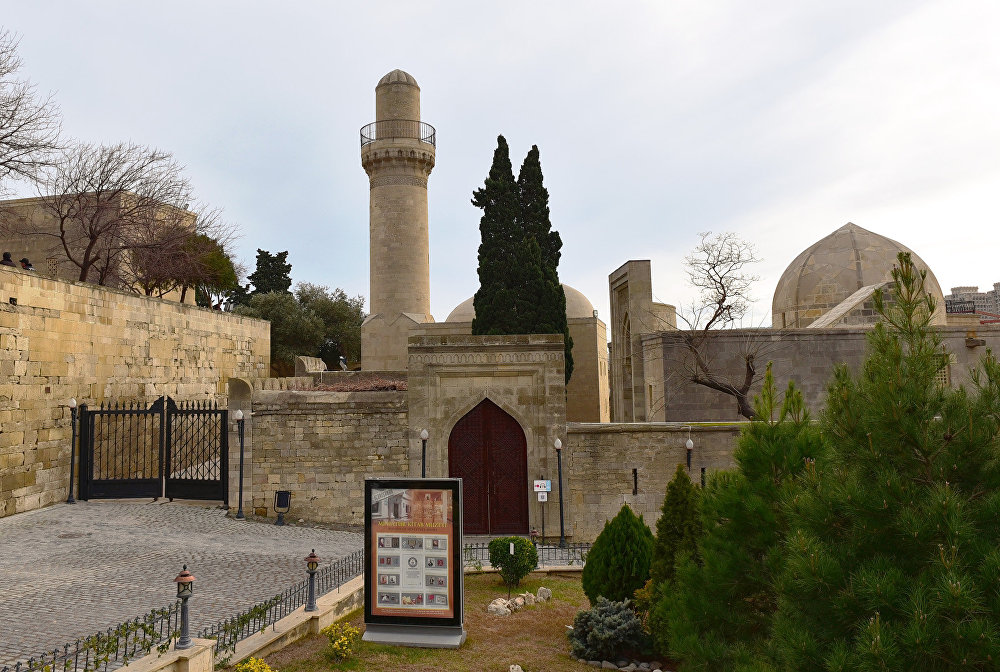 During the establishment of the Shirvanshah state, the importance of Baku increased even more. As a result of a strong earthquake in the 12th century, Shamakhi was severely damaged, and then Shirvanshah I Akhsitan, whose wife and children were killed, moved the capital of the Shirvan state to Baku. Thus, Baku became one of the main cities of Shirvan. In his new capital, Shirvanshah erected the fortress walls of the Old City and dug a ditch around these walls. The people of the city were engaged in handicrafts, making carpets, copper and bronze utensils, and weapons. Many of these examples of folk art are now kept in museums around the world. Baku has become a strategic port on the Caspian Sea, which has created favorable conditions for its further development.
The Shirvanshahs created a strong navy in the Caspian Sea. During the reign of Shirvanshah I KHALILULLAH (1417-1462) great construction works were carried out in Baku, the economy and culture were strengthened. In 1501, Shah Ismail Safavid conquered Baku. During the reign of Shah Tahmasib (1538) the Shirvanshah state became part of the Safavid state. After the disintegration of this state in the 18th century, the independent BAKU KHANATE was established here.
At that time, the geopolitical interest of the Russian Empire in the Caucasus was very strong. From this point of view, Baku was of special importance. Russian Tsar Peter I marched on the Caspian Sea. In 1723, he sent an expedition to the Caspian Sea, and in the same year Peter's troops captured the entire Caspian region, including Baku, Shamakhi, Shirvan, Derbent, and the Caspian cities of Iran. The wars between Russia and Iran ended in 1813 with the signing of the Gulustan Peace Treaty. According to the agreement, Azerbaijan was divided into two parts: the northern part fell into the hands of Russia, and the southern part into the hands of Iran.
MONUMENTS OF BAKU. Among the historical monuments of Baku, the most interesting is the ancient ICHERISHAHER, surrounded by a large fortress wall on three sides. SHIRVANSHAHLAR PALACE and various complexes related to it (mausoleum, palace mosque, divankhana, palace bath, palace mausoleum of the scientist Seyid Yahya Bakuvi (Dervish tomb)) are located here. The Palace of Shirvanshahs was built by Shirvanshah I Khalilullah (1417-1462) and his son Farrukh Yasar (1962-1501). FRIDAY MOSQUE is one of the ancient monuments in Icheri Sheher. A text written by SULTAN OLCAYTUN (XIII century) remains in the building of this mosque. The streets of Icheri Sheher are very narrow. Sometimes the passage between houses is so narrow that when you open your hands to the sides, you occupy the whole street. In many small shops here there are ancient and modern carpets made by folk artists, ceramic products, copper utensils, etc. It is possible to buy things. You can get acquainted with the Azerbaijani national cuisine in the restaurants of the ancient Caravanserai building in the Old City.
Looking at the city from its upper part - from a mountain park or from the sea, Baku looks like an amphitheater located on the slopes of rocky hills. It is reminiscent of a beach bowl. On the outskirts of the inner city, near the big BAKU BOULVARI, stands the GIRL'S TOWER, one of the most important historical and architectural monuments of our country, which has become a symbol of Baku.
THE GIRL'S TOWER dates back to the 12th century. According to scientists, this fortress was used for military and defense purposes and is part of a whole complex of military and defense facilities, starting from the northern border of Azerbaijan - the fortress of Derbent . The Gilgilchay defense fortification complex started from the sea. Many fortresses have been built along this wall, which ends with a large tower in the Chiraggala Mountains. 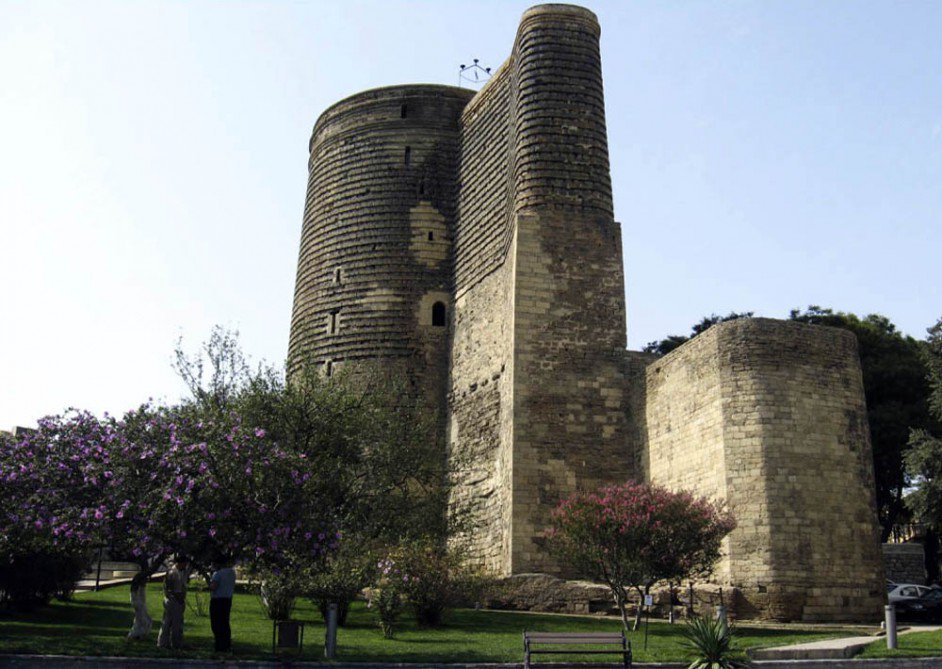
However, scientists have not yet been able to unravel all the secrets of the GIRLFORT. For example, there are facts that this fortress was built earlier. Many Baku residents consider the Maiden's Tower, a unique example of the history and architecture of our country, very important not only from a religious, defensive and scientific (astronomical) point of view, but also from an esoteric point of view. Therefore, in the folklore of the city there are many legends about the GIRL'S TOWER itself and its name. It has been included in the UNESCO World Heritage List since 2000.
Today's Baku is a modern city with the unique beauty of the East and the features of a modern megalopolis. There are several museums in Baku, the capital of Azerbaijan: Museum of Azerbaijani History, Museum of Literature, Museum of Musical Culture, Carpet Museum, Theater Museum, as well as the founder of modern Azerbaijani music UZEYIR HAJIBAYOV, famous Azerbaijani composer Niyazi, composer and jazz singer VAGIF MUSTAFAZADA in Baku. There are memorial museums of world-famous musician MSTISLAV ROSTROPOVICH, writers and playwrights HUSEYN JAVID, JAFAR JABBARLI, MAMMAD SAID ORDUBADI and others, a unique miniature book museum.
Undoubtedly, the new symbol of modern Baku is the Heydar Aliyev Center. A beautiful building, surrounded by various facades on four sides. Neighboring areas are neatly decorated, with fountains, stairs and escalators. This is a famous work by Iraqi-British architect Zaha Hadid.
The small town "Little Venice" is one of the beautiful corners of the Seaside National Park in Baku. This small city, reminiscent of Venice, Italy, with its beautiful appearance gives the capital of Azerbaijan a charm. In the 60s of the XX century, "Little Venice" was created on Baku Boulevard and became a favorite place for recreation of Baku citizens and visitors.
Seaside Boulevard is an attractive corner of Baku, one of the favorite places for recreation and residents of Baku. In 2009, the Boulevard celebrated its 100th anniversary. Before the reconstruction, the length of the boulevard was 16 kilometers, but after the reconstruction it was 25 kilometers. In March 2014, a new 60-meter-high waiting wheel was unveiled in the new tabloid part of Primorsky National Park. Inspired by the "sails" of the Sydney Opera House, the boulevard has attractions such as the Park Bulvar Mall and the Caspian Waterfront shopping center. At the end of the boulevard is the State Flag Square (World Flag Square) with a flag and a flagpole. Not far from the flag is the Crystal Hall sports and concert complex, designed for the Eurovision 2012 song contest. 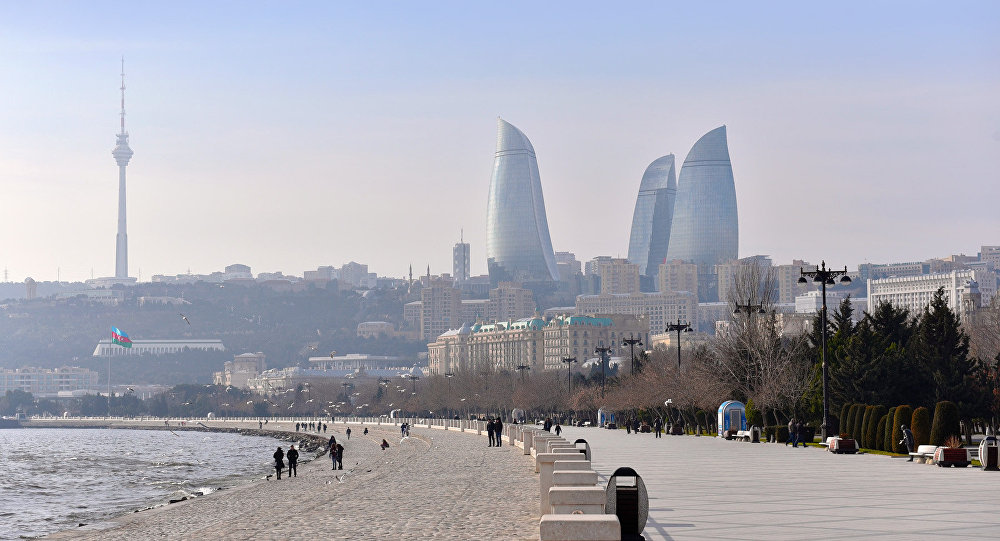
As carpet weaving is the oldest art in Azerbaijan, it is not surprising that the world's first specialized museum was established in Azerbaijan to create, collect, preserve and study the Carpet Museum.
The ultramodern architectural complex, which is a new symbol of the Azerbaijani capital, fits perfectly into the overall look of the city. The Flame Towers, as its name implies, are three huge buildings that resemble "flame" or "bright" towers of fiery tongues. You don't have to go out to see them, because these towers are everywhere.
The capital has numerous exhibition and concert halls, art galleries, theaters, sports complexes, stadiums, swimming pools, hotels and restaurants.
There are many beaches around Baku around the perimeter of the Absheron Peninsula. In 5 months of the year, it is possible to sunbathe and bathe on the beaches of Absheron. There are many sunny and hot days here. In summer, when the temperature drops, after sunset, discos and nightclubs start working on the beaches. Numerous hotels, holiday homes and sanatoriums on the Caspian coast offer their services to tourists and vacationers.


কোন মন্তব্য নেই:
একটি মন্তব্য পোস্ট করুন