Brief History Of Singapore - A Timeline of Events
Hill”


1299
At the inception of a British settlement in Singapore, Sir Stamford Raffles and John Crawfurd, the second British Resident of Singapore, found many vestiges of a much older settlement. Subsequent residents paid no attention to these remains, and all of them, including the Malay wall, the ruins of an ancient orchard, a bathing place, some brick buildings, pottery, and coins on the “Forbidden Hill” (Fort Canning Hill), and the Singapore Stone inscription at the mouth of the Singapore River, had disappeared by 1850. A chance discovery of some gold jewellery on the hill in 1928 did nothing to bring about a change in this attitude.
In January 1984, the National Museum of Singapore and a few concerned citizens resolved to use modern archaeological methods to discover whether any pre-colonial remains could still be recovered on Fort Canning Hill. The first excavation, which was sponsored by the Royal Dutch Shell Petroleum Company, focused on the area around the Keramat Iskandar Shah (believed to be the burial site of Iskandar Shah, the last ruler of ancient Singapura) on Fort Canning. In just 10 days, several hundred artefacts dating back to the Yuan Dynasty were recovered in a layer of soil that had remained undisturbed since that time.

This discovery led to a series of excavations held within the area, which John Crawfurd had already discerned as ancient Singapore in 1822: about 85 hectares (850,000 square metres) of land bounded by the Singapore River, the former beach on the southeast side of the Padang, Stamford Road and Fort Canning Hill. Several hundred thousand artefacts were recovered dating back to the period between 1300 and 1600. These artefacts were divided almost equally between Chinese and local (Malay-style) pottery, with small quantities of glass, gold, copper, lead, and dammar (tree resin used as incense).
Since the inaugural excavation in 1984, numerous excavations have been undertaken at Fort Canning with the support of the National Parks Board and its predecessor, the Parks and Recreation Department. These excavations continued to focus on the area between the Keramat Iskandar Shah and the old Christian cemetery. The artefacts found there suggest that the site was used for craftsmen’s activities such as glass and gold working in the 14th century. Other artefacts such as a Chinese porcelain compass and an incense burner indicate that a ceremonial or religious area was once located nearby, perhaps near the summit of the hill. That area was flattened for an artillery fort constructed in the 1850s. The fort was then demolished to make way for a water reservoir in the 1920s.
Excavations were also undertaken at the site of Singapore’s new Parliament House complex in 1995. In just over three months, considerable evidence of commercial and industrial activity was unearthed there, including copper wires, fish hooks, remains of copper working, and over 100 Chinese coins. Some good quality pieces of Chinese porcelain were also uncovered.

The next excavation took place at Empress Place in 1998 when the Empress Place Building was being restored as the Asian Civilisations Museum. Important discoveries included a bronze arrowhead and a lead statue of a man (or a deity) riding a winged horse. The style of the statue is reminiscent of temple carvings found in East Java in the 14th century. The statue and the other artefacts found there were probably either lost or had fallen into the mud during the loading and unloading of cargoes along the bank of the Singapore River.
In 2000, the old Colombo Court site was excavated. No surprising new discoveries were made, but the project did yield important new evidence on the settlement pattern and use of space in 14th-century Singapore. In 2001, excavations in Bras Basah Park (now the campus of the Singapore Management University) confirmed that this area, which lay outside the former Malay Wall protecting the north-eastern side of the ancient city, was uninhabited in former times. In 2002, artefacts were recovered by a combination of systematic excavation and chance finds by workers at the Old Parliament House site (now the Arts House). This site yielded 12 intact 14th-century stoneware bottles, the first unbroken artefacts to be found from this period in Singapore’s history.
In 2003, a brief excavation in a corner of the Padang proved that beneath this large playing field is a potentially enormous trove of archaeological knowledge. The artefacts recovered from the 14th-century layer there included Chinese coins which had been partially melted by heat, and fragments of stone which might have been used in recycling the copper from these coins. In 2003 and 2004, a year-long excavation in the north-east corner of the grounds of the St. Andrew’s Cathedral produced a large quantity of artefacts of many types, including gold wires.
Archaeological research is continuing in the old city. These projects are initiated whenever a modern construction project is in progress or about to take place. As many artefacts as possible are salvaged. Examples of such projects include the Spice Garden site on Fort Canning, the site of the future National Art Gallery at the former City Hall and Supreme Court buildings, and the Victoria Concert Hall.
Exploration in the Riau Archipelago south of Singapore has shown that many Chinese artefacts dating back to the 14th to 16th centuries were interred with the dead as burial offerings. Two conclusions may be drawn from this research. First, the people of Riau travelled to Singapore to barter sea products such as tortoise shell in exchange for Chinese products; Singapore was a regional centre of trade at the time. Second, the people of Riau practised a form of ancestor worship while the people of Singapore were probably Buddhists who cremated their dead.
The research conducted in the Riau Archipelago has produced the clearest picture of urban life in any part of ancient Southeast Asia. The huge quantity of artefacts unearthed will take many years to analyse. This research work is continuing at the National University of Singapore, the Nanyang Technological University and the Institute of Southeast Asian Studies.

The Jinrikisha Station (also known as Jinricksha Station) is located at the junction of Tanjong Pagar Road and Neil Road in Kreta Ayer (Chinatown).[1] The station was built in 1903 and began operations on 1 July 1904.[2] At the time, it served as the main station for rickshaw services and the registration of rickshaws, which were once ubiquitous on Singapore’s streets.[3]
The first rickshaws – small, lightweight, two-wheeled carts drawn by rickshaw pullers – were imported into Singapore from Shanghai in the early 1880s.[4] By 1892, the Hackney Carriage Department had established a Jinrikisha Department to register, license and control the Singapore rickshaw population through the enactment of the Jinricksha Ordinance.[5] By the 1900s, there were over 8,000 registered rickshaws manned by around 20,000 to 30,000 pullers working in shifts.[6] After World War II, rickshaws were phased out and replaced by trishaws for short-distance transportation.[7]
The Jinrikisha Station was designed by municipal architect David McLeod Craik.[8] The colonial-style V-shaped double-storey building with its curved facade makes it an eye-catching landmark.[9] The building was gazetted for conservation in 1987[10] and put up for sale by the Urban Redevelopment Authority in 1988 as a multi-purpose building that could be used for retail, restaurants or offices.[11] One of the conditionsof the sale was that the buyer had to restore important features of the building such as the exposed red brickwork, which had been painted white.[12]
The first electric trams in Singapore began operations on 24 July 1905.[1]
The enactment of The Tramways Ordinance in 1902 by the Municipal Authorities in Singapore allowed the London-registered company, Singapore Tramways, Limited, to set up a tramway system as well as future transport services.On 29 March 1905, Singapore Electric Tramways, Limited, took over the management of the tram development from Singapore Tramways, Limited.[2]
There were six tramway lines, which were based on the routes of the former steam tram service that was discontinued in 1894. The routes covered Telok Blangah Road to Keppel Road, Tanjong Pagar Road to Geylang Road, Anson Road to Johnston’s Pier, Bras Basah Road to Serangoon Road, Serangoon Road to Kallang Road and High Street to Tank Road.[3]
Despite trial runs of the electric trams being reported in the local newspapers — possibly to drum up some public interest[4] — the official opening of the trams on 24 July 1905 drew little response.[5]
Besides the limited tram routes covering areas away from town,[6] high fares and the complicated payment structure added to the public’s reluctance to commute via tram. Tram rides were initially charged by the number of sections in a route or by the full distance of the route, with fares ranging from 10 to 20 cents. This was expensive in comparison to other existing modes of transportation such as rickshaws or gharries (horse carriages), as well as the fare standards in England.[7]
Tram fares were eventually reduced to as low as three cents per section. More people began to use the trams and in 1909 an average of 32,000 passengers a day used the trams.[8]
However, trams faced a variety of issues such as obstructions on tramlines, boycotts by Chinese guilds,[9] as well as infrastructure and mechanical issues.[10]
In 1922, under advice from the Shanghai Electric Construction Company, tram operations were revamped, including repairs to the tramcars and revised fare scales in an effort to keep the system going. The situation improved and the operators were able to turn a profit.[11]
In 1923, an ordinance proposing the substitution of trams with trolleybuses was drafted and passed in October 1925 as the Singapore Traction Ordinance. The service officially came to an end on 4 September 1927.[12]
References
1. TRAMWAYS START RUNNING.
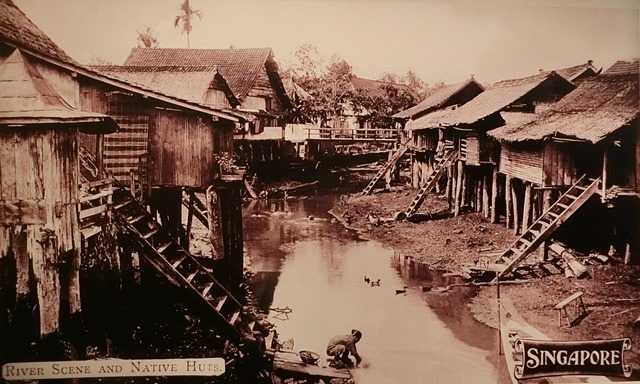
Origin and Foundation of Singapore: Once upon a time
Emergence of Modern Singapore: Raffles Effect
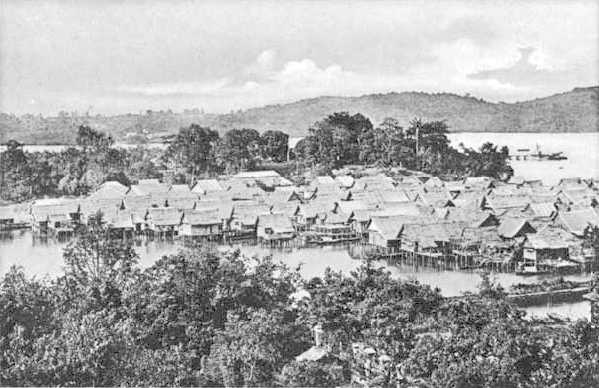
British Acquisition
World War II and End of Colonialism
The British had no option but to surrender the island and they did so within a week. Singapore remained in the hands of the Japanese until September 1945. The Japanese were tyrants and they executed thousands of Chinese Singaporeans. British Prime Minister Winston Churchill declared it as the worst disaster and the largest ever capitulation in British history. Singapore faced massive unemployment, staggering economic growth, inadequate housing, labour strikes, social unrest and dwindling infrastructure. However, after 3 years, the Japanese surrendered and the British reoccupied Singapore.
Post War Period
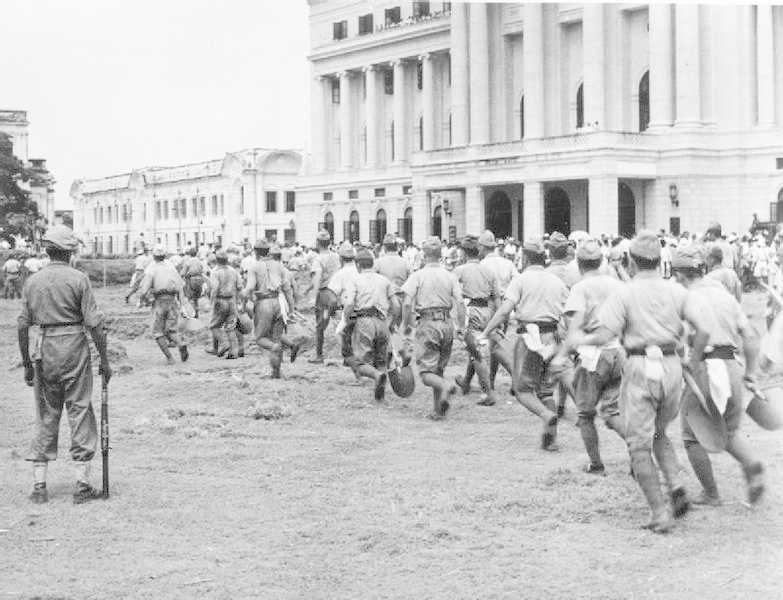
The rise in the prices of commodities and unemployment led to a number of rebellious strikes which in turn led to stoppages in transport and other services. The economy started to improve by late 1947, but it would still take years to stabilize the economy like the pre-war time. The British had lost the confidence of Singaporeans as they failed to defend the country. This led to a state of political awakening among the local population and there was a rise in the number of anti-colonial groups and parties who came up with a myriad of nationalist slogans fighting for 'Merdeka' or independence in the Malay language.
Independence of Singapore
In August 1963, Singapore declared independence from the British rule and joined the federation of Malaysia along with Malaya, Sabah and Sarawak. However, after ideological conflicts between the federation and the Singapore government's major political party, People's Action Party (PAP), Singapore left the federation in 1965 and on 9th August in the same year gained sovereignty officially. Singapore became completely independent, and Yusof Bin Ishak was sworn in as its first president while Lee Kuan Yew continued as prime minister.
The merger with Malaysia proved unsuccessful. Singapore left Malaysia and on 9 August 1965 became an independent and sovereign democratic nation. Even today, Singapore preserves the remnants of its multicultural, colonial and wartime past in the form of monuments, museums and memorials.

Singapore Today


কোন মন্তব্য নেই:
একটি মন্তব্য পোস্ট করুন