মঙ্গলবার, ৭ ডিসেম্বর, ২০২১

Abkhazia’s passport policy

Equal and more equal: Abkhazia’s passport policy
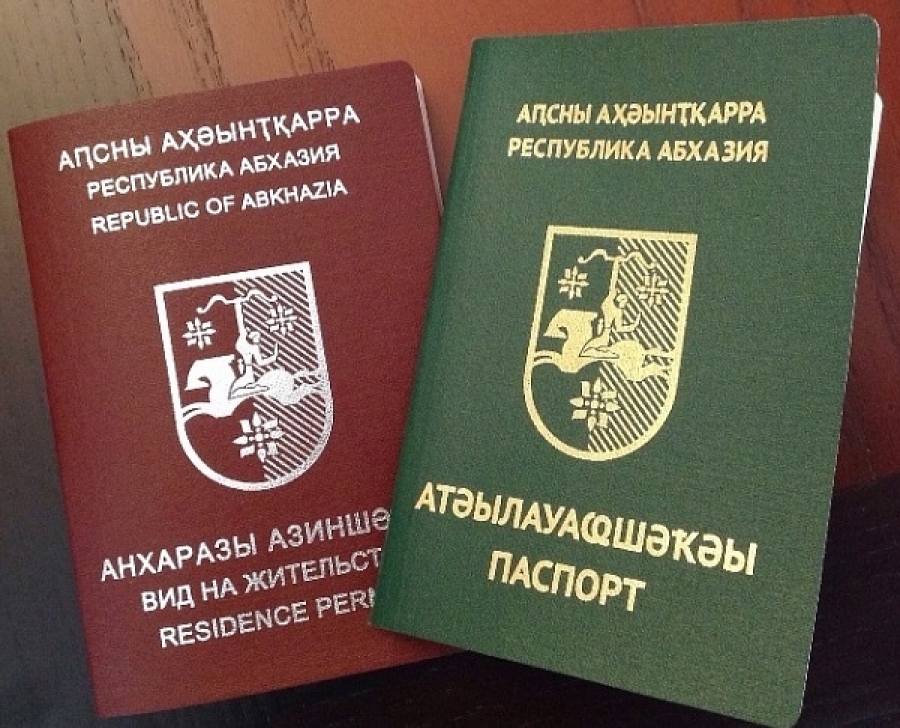

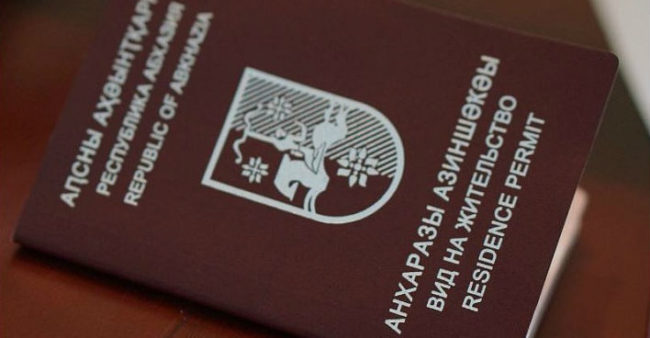
Abkhazian residence permit and passport )

As the issuance of new passports continues in Abkhazia, many non–ethnic Abkhaz — ethnic Armenians, Russians, Georgians, and others — fear the reason behind the new regulations is to deprive them of citizenship.

Ruslan Yaylyan, an ethnic Armenian from Abkhazia’s capital of Sukhum, told OC Media that when he applied for a new passport last year it was his second time applying for an Abkhazian passport and he did not expect any problems. However, ten days after submitting the required documents, Ruslan was asked to come to the passport office.

He recalls that the passport officer asked him rudely to bring his military ID, then his birth certificate, and then his conscription card. Ruslan says the process continued for three months.

During the 1992–1993 Georgian–Abkhaz war Ruslan was twelve years old and his family’s house,  along with all of his documents, was burnt down by Georgian troops. After the war, the process of recovering the documents wasn’t easy — many people used ad hoc certificates instead of passports.

Ruslan says he wasn’t officially registered as a resident of Abkhazia until 1999, but that he never left. He even served in the Abkhazian army, which he can prove with his military ID.

Ex post facto

The process of exchanging old passports for newer ones in Abkhazia has been in motion since 2016. Abkhazia’s Ministry of Internal Affairs told OC Media that around 140,000 passports are to be reissued.

A rule in the new citizenship law means that in order to replace their old passports with the updated ones, citizens of Abkhazia must prove that they lived in Abkhazia between 1994 and 1999.

However, a number of non–ethnic Abkhaz citizens told OC Media they saw the rule as being discriminatory, claiming it was not being applied to ethnic Abkhaz people.

Issues arose after the 2005 citizenship law turned out to be retroactive. The 2005 law annulled the previous citizenship law adopted in 1993, essentially stripping citizenship from people who had been granted it under the previous law.

According to article 5 of the 2005 citizenship law, to be eligible for citizenship a person must have permanently resided in the territory of Abkhazia for at least five years at the time of Abkhazia’s 1999 declaration of independence and must not have renounced their citizenship.

‘People who left Abkhazia between 1994–1999 didn’t understand that they would be breaking the law and could lose their citizenship’, says Oleg Papaskiri a lawyer in Abkhazia.

‘Applying the [2005] law on citizenship against those who didn’t live in Abkhazia at that time or those who did but can’t prove it as they are trying to obtain new passports is illegal’, Papaskiri tells OC Media.

The same 2005 law states that citizenship of Abkhazia is equal no matter how it was acquired. It also states that a person living abroad is not grounds to revoke their citizenship and that depriving someone of citizenship requires a presidential decree.

A Russian manbag

Ruslan says that each of his trips to the passport office ended with a ‘new adventure’.

‘Once I even brought along my commander and neighbours as witnesses but even that wasn’t enough for the passport office. At some point it seemed to me that the problem wasn’t in the documents, that they just wanted to shake out some money’, Ruslan says.

‘Another time when I came, one of the officers saw me and said, “uh-huh, you walk around with a manbag? So you live in Russia?” For me, this was so outrageous and brazen that I could hardly restrain myself. And this is how most of the passport office staff behave. I won’t even mention the huge queues there. They let their acquaintances jump the queue while elderly people stand there for hours’, Ruslan says.

‘In the end, I received my passport, although it came with humiliation. If they hadn’t given it to me, I would probably have sold everything and left the country. You won’t get a job in Abkhazia without a passport’.

‘Taken anyway’

The passport replacement process has been closely connected to the legal status of the inhabitants of eastern Abkhazia, the majority of who are ethnic Georgian. In 2009–2014, ethnic Georgians in Abkhazia’s Gal District were issued Abkhazian passports. The Abkhazian government later ruled that the process was illegal.

According to the current citizenship law, people who didn’t reside in Abkhazia between 1994–1999 are not citizens. Gal’s ethnic Georgian population, most of which was displaced by the war, were only officially allowed to return to Gal in 1999.

On top of this, in 2013, Abkhazia passed a law according to which only Abkhazian–Russian dual citizenship is allowed. This served as an additional legal basis for a mass de-passportisation of ethnic Georgians in Gal, the majority of whom held Georgian citizenship as well.

The head of the passport department at Abkhazia’s Interior Ministry, Eduard Manargiya told OC Media that while issuing new passports there were cases of ethnic Georgians simultaneously having Abkhazian ID documents and being citizens of Georgia.

‘They still received the new passports, which were later taken away’, Manargiya says.

I was brought to tears’

Others who lost their right to obtain new passports include those who between 1994–1999 studied at Russian universities, served in the Abkhazian army, or were pensioners who travelled to Russia to collect Russian pensions.

Marina Chistyakova is an ethnic Russian native to Sukhum. She stayed in Abkhazia during the war but in 1995 moved to Chelyabinsk in Russia’s Ural Mountains region — to care for her ill mother. Marina returned to Abkhazia in the 2000s and obtained an Abkhazian passport, but when the time came to renew it, she ran into trouble.

‘I was brought to tears because of my Abkhazian passport’, Marina tells OC Media. ‘Every trip to the passport office ended in scandal and insults. Passport officers don’t spare words when they find out that you’re not an ethnic Abkhaz.’

‘My husband died during the war, defending Abkhazia. I love my country very much, but seeing this injustice, I just want to leave. Replacing a passport turned into discrimination and that’s not good if we’re to live in a civilised state’, Marina says.

While Ruslan Yaylyan, in the end, did manage to prove his right to a passport, Marina is still fighting for hers.

‘The last time [I went to the passport office] they asked for my diploma. What does this have to do with a passport? We are simply humiliated each time and I’m not at an age where I’m going to endure it. I will probably sue them, otherwise, this problem won’t get solved. It’s not our fault there are gaps in the Abkhazian legislation’, Marina says.

Ethnic Abkhaz are more equal

Although not stated explicitly in the legislation, in practice, the law does not appear to have been applied to ethnic Abkhaz, who have no restrictions in obtaining Abkhazian citizenship.

Despite making repeated inquiries, OC Media was unable to find a single ethnic Abkhaz person who had been asked to bring additional documents or been subject to additional verification processes.

A spokesperson for the Abkhazian Ministry of Internal Affairs told OC Media that an internal manual regulates the procedures for replacing passports and which documents must be submitted.

However, they said the manual specifies that ‘special citizens’ are required to submit a number of additional documents. No public information is available on who these ‘special citizens’ are.

According to the ministry, the manual says it is up to the Foreign Ministry, Interior Ministry, and State Security Service to assign people to this category.

The Interior Ministry told OC Media that ‘virtually all’ people of the ‘special’ category who had applied for an Abkhazian passport had received their documents. They also said that of 95,500 passports received for renewal by 1 September, only 520 were rejected.

সোমবার, ৬ ডিসেম্বর, ২০২১

Has Abkhazia’s new Labour Code made a difference for workers?

 Has Abkhazia’s new Labour Code made a difference for workers?

The Ministry of Labor and Social Development of Abkhazia (/Sputnik Abkhazia)

A new Labour Code came into force in Abkhazia in January 2017, which on paper, significantly expands the rights of workers. But the law has limitations, and not all workers know their rights.

Svetlana (not her real name) works in two different state agencies. ‘I have a contract with one of them, but for some reason not with the other. I’ve approached the human resources department several times and asked to be registered, but each time I’m told “we don’t have time now, we’ll do it some other time” and this is still the case’, she says.

Svetlana adds that she and her colleagues work overtime from time to time, but the management of the organisation where she works does not pay them for the extra work.

A $5 fine

One of the biggest changes the new Labour Code brought in was to introduce a Labour Inspectorate. Working under Abkhazia’s Ministry of Labour and Social Development, the Labour Inspectorate is supposed to inspect workplaces for violations of the code, such as in Svetlana’s case.

So far, they have spent most of the year recruiting staff and developing a regulatory framework, and only started inspections to identify labour violations this quarter.

‘At the moment, our inspectors are checking state-funded institutions. Next year, we will start checking private enterprises, once our specialists have a degree of expertise; then the labour protection inspection will be on track’, a spokesperson for the Ministry of Labour told OC Media.

This is just one of the many mechanisms introduced in the new code — which replaces  Soviet era legislation — to protect workers’ rights. on top of a labour inspection mechanism, the law makes employment contracts compulsory and sets fines for employers who violate the rights of workers.

The representative of the Ministry told OC Media the fines would mean ‘an employer feels their responsibility when it hits his own pocket’.  However, the size of the fine set out in the code is just five times the minimum hourly wage, i.e. ₽300 ($5). The government is considering options for increasing fines by amending the Administrative Offences Code, the spokesperson added.

Saida, another government official who requested to remain anonymous, says she has never personally faced violations of the Labour Code, but that she has heard stories from colleagues who, for example, lost their jobs after taking maternity leave.

‘Sometimes salaries are not paid in full’, she says, ‘for example, employees of secondary and post-secondary [educational] institutions are paid by the hour. Many don’t even know how much an hour of work is worth; everyone gives them different sums. And if they turn to the main agency for information, this can lead to a discontented employer’, she said.

According to the representative of the Ministry of Labour, there is no single pay scale in state educational institutions. In state agencies, this is set by each department, and there are extra payments according to, for example, how long someone has worked there. For private businesses, pay is regulated directly through a contract.

Contracts are mandatory

According to the new Labour Code, it’s not only companies and entrepreneurs who are obliged to sign contracts with workers, but anyone paying someone else for work.

‘Even if a person invited an employee to work on his personal plot of land, he must sign a contract with him. And the employee has the right to demand the employer fulfils this employment contract. This will count towards his work record but these contracts need to be registered. It's just that not everyone knows about this at the moment, although we are trying to inform the public. It takes some time for people to get used to it’, the ministry spokesman told OC Media.

He says it is mostly foreign workers who will have problems, since it is usually them who do not have labour contracts.

According to businessman Artur (not his real name), he often has to hire workers from former Soviet countries. He says that foreigners are registered with the Migration Service and they pay taxes legally to the state. However, even though a labour contract is a legal requirement, in practice this happens very rarely.

‘On the one hand, the status quo is convenient. I made an agreement with an Uzbek, he arrived, did the work, and we were both satisfied. But what if he didn’t [do the work]? Or what if he damaged part of the site during the work? Or fell off the roof? And you don’t have any contract with him. Representatives of law enforcement agencies will ask what the person was doing there and why he fell or something like this. That’s a double-edged sword. Therefore, contracts are necessary’, he said.

In case of dismissal — to the court

OC Media spoke with a number of lawyers who said most labour disputes they deal with involve clients who were fired from their jobs. In most cases, they said they managed to successfully challenge the employer's decision.

‘In one organisation, when the head changed, he fired a brilliant employee with a good track record and gave the position to an acquaintance. Under the law, he had the right to [fire him], but he did not indicate the grounds for dismissal, did not refer to the Labour Code, and so on. The court case continues’, one lawyer told OC Media.

His colleague explains that in state institutions, dismissal procedures are very often not properly followed.

‘Very often, the management’s decisions to dismiss someone is contested only because the procedure itself was not properly followed. Even if the boss is right, a dismissal is still considered illegal in such cases’, the lawyer explains.

When this happens, the dismissed employee has the right to their job back, but only if they are a member of a trade union.

Abkhazia’s tourism catastrophe — ‘who would want to come here?’

Abkhazia’s tourism catastrophe — ‘who would want to come here?’


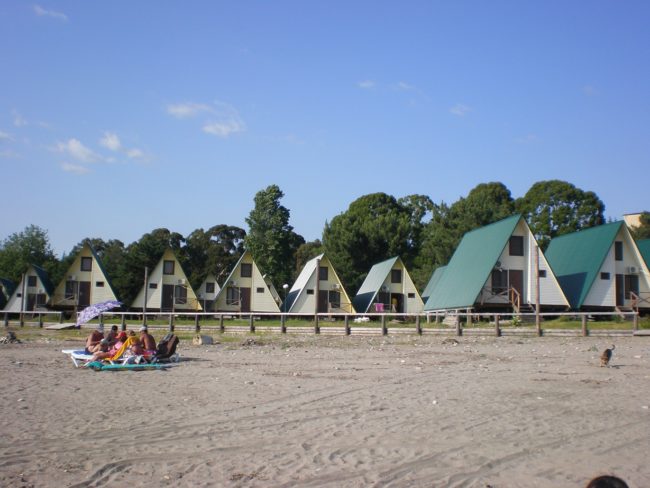
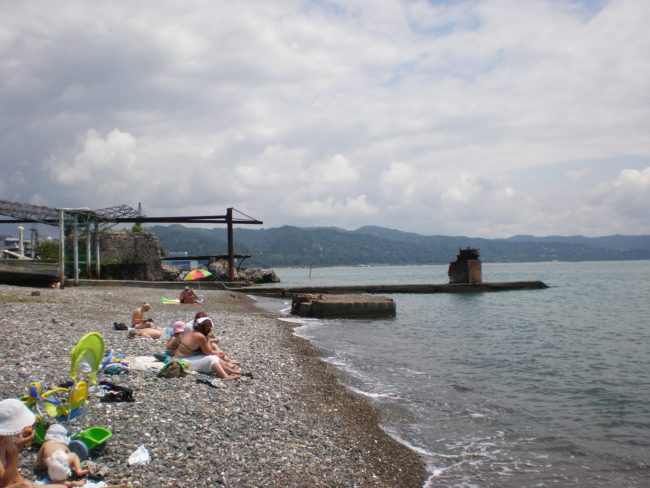
A beach in Sukhum (Dominik K. Cagara/ Archive)

Many in Abkhazia have lamented the failure of this year’s tourist season, connecting it directly to rising levels of crime. The usual problems were compounded by high profile attacks on tourists and an explosion at an ammunition depot which left two tourists dead.

‘The government can’t cope with crime’

Zhanna Bganba has been renting out her holiday house to tourists for seven years. She says this year the season fell through because the government has failed to cope with crime.

‘We are all very upset that this year the tourist season was spoiled. Other people in the tourism sector say the same. Year after year we’ve lived on this money, but this year 60% of our customers simply refused to come, as there was constantly news about someone getting robbed or killed’, Zhanna tells OC Media.

According to her, even those who came felt uncomfortable with what was happening during their stay.

A series of events hit the tourist season hard this year. The murder of a Russian tourist, high-profile robberies and attacks on tourists, and on top of it all, the explosion at a Russian military ammunition dump which left many tourists dead and wounded. All this has negatively affected Abkhazia’s image as a tourist destination.

‘Every summer I managed to save money to survive the rest of the year. This year I will have to get a job because I earned nothing this season. If I were a tourist, I would prefer to go to Turkey, where for the same money I will get better service and safety. And their food prices are lower than in our country’, Zhanna says.

A tourism bonanza

The previous two years broke all records for the local hospitality sector.

According to the Russian Federal State Statistics Service, more than 4 million Russians visited Abkhazia in 2016, making it the most popular foreign destination for Russians. Russian tourists are attracted to Abkhazia’s warm sea and the absence of a visa regime — it’s possible to visit with only an internal Russian passport.

While Russia’s statistical service counts everyone who crosses the border, the Abkhazian Ministry of Tourism counts only those who stay in hotels and guesthouses. The authorities in Sukhum estimate last year’s influx of tourists to be 1.5 million, bringing in ₽2.6 billion ($44 million) — 8% of Abkhazia’s GDP.

A beach in Sukhum (Dominik K. Cagara/ Archive)

‘The complete crash of the tourist season’

Gudisa Kadzhaya owns 14 cottages in the seaside town of Pitsunda. Two years ago, he took a loan to build eco-cottages in the forest.

‘For the first two years the business was going well, the cottages were full, people kept booking the rooms. But what happened this year was the complete crash of the tourist season. My cottages are 50% empty. Now we are in the high season, but there are still very few people here compared to last year’, Gudisa told OC Media in early September.

At only 28 years old, Gudisa had managed to build a truly profitable business, which used to bring in several million roubles (up to $100,000) each season. Thanks to this, he had managed to repay his loans to the bank. Now, however, he is selling all his cottages to pay off the rest of his debts.

‘It makes no sense to take another loan, so I decided to sell everything. The state doesn’t render any support to businessmen and especially doesn’t care about the image of the country. The only reason this season has failed is crime, which has surpassed all possible bounds. Tourists are being robbed and murdered — who would want to come here? No-one’, Gudisa says.

‘We patrolled the beaches ourselves’

Suren Arakelyan has to protect his guests in New Athos — in a literal sense. He rents out rooms in his house but because of the increase in thefts, he and his neighbours agreed they would try to catch the thieves themselves.

‘Tourists kept complaining that they had their belongings stolen on the beach, although we always warned them not to take money or expensive things to the beach. I got tired of all the tourists leaving because of the criminality and decided with my neighbours to patrol the beaches where our guests rested’, Suren says with anger.

He recalls how one day he caught a 15-year-old boy who had stolen a purse from a tourist.

‘It turned out he was from a dysfunctional family — that’s how he justified his actions. We didn’t hand him over to the police, they won’t fix him anyway. But we warned him that we were watching him, and if we catch him again, he will have to face the consequences’, Suran says.

According to him, everyone who rents out rooms hopes crime levels will improve by the next season.

‘I have ten rooms in my house and each of them brought me ₽1,000 ($17) a day. This year only four rooms were occupied. Now we are in the high season, but there are no tourists at all. The people who booked rooms have refused to come, explaining they were afraid something could happen to them. I still believe the police will join us in our efforts and improve next year’s season for us’, Suren says.

‘Next year will be better’

According to Anna Kalyagina, director of local travel agency Atsetuk Travel, this May visitor numbers were about 60–80% of the previous year’s.

‘In general, this season’s collapse was not predicted. The crisis also hit different sectors differently at different periods of time. While at some points guesthouses were 80–90% full and occupancy in hotels was at 30–60%, other times this was the reverse’, Anna explains.

She also believes the decline in tourism is directly connected to safety concerns.

‘Next year is likely to be a bit better if the situation with the safety of tourists improves and the weather stays good. We still should not delude ourselves because there will still be a significant decline compared to 2015 and 2016, maybe 15–20%’, Anna says.

According to her, it is also necessary to improve the quality of service tourists receive, as well as the facilities and infrastructure.

‘We should not lose our uniqueness and attractiveness. It’s necessary to preserve our culture and nature to attract tourists with eco-holidays and active kinds of tourism, everything that is related to our nature and culture. All of it should be supported by the state, and of course, by all state structures’, she says.

The Ministry of Internal Affairs of Abkhazia declined our request for comment on this story, referring us to their official crime statistics.

republic of Abkhazia will start issuing residence permits


Abkhazia to issue residence permits


The government of the de facto republic of Abkhazia will start issuing residence permits, Abkhazian state press agency Apsnypress reported quoting Abkhazia’s Ministry of Internal Affairs.

The permits will be issued for foreign citizens staying legally on the territory of Abkhazia for not less than one year. People living in the Gali (Gal) District are mentioned in a separate paragraph.

‘[Residence permits will be issued] in a simplified procedure to: foreign citizens born in the territory of the Gal District of the Abkhazian Autonomous SSR who have permanently resided on the territory of the Republic of Abkhazia since 12 October 1999 for not less than ten years, and to the members of their families (spouse, minor children)’, the statement reads.

Gali is an administrative unit of Abkhazia, where according to the 2011 census, 98% of its more than 30,000 residents are ethnic Georgians. The district is separated from Georgian-controlled territory by the River Enguri (Ingur).

The majority of Gali residents have Georgian citizenship. Many of them used to have Abkhazian passports as well, which were cancelled following a law passed in 2013, according to which only Abkhazian–Russian dual citizenship is allowed. There are exceptions for ethnic Abkhaz diaspora living abroad.

The Gali District administration conducted research in 2015, according to which more than 18,000 Georgians in the district held Georgian citizenship.

The Prosecutor’s Office of Abkhazia launched an investigation in 2015 against the administration of Gali for ‘illegally’ issuing Abkhazian passports to Gali Georgians. According to Abkhazian law, an ethnic Georgian person who wishes to receive an Abkhazian passport has to prove that they aren’t citizens of Georgia.

In 2016, the Abkhazian Prosecutor’s Office announced that the investigation into passports issued to Georgians was over. According to the investigation, 14,988 passports were illegally issued in the period 2007–2014 by the administration of Gali. The recipients of these passports had Georgian citizenship as well.

After the investigation was over, the Abkhazian government announced that they would start issuing new passports and abolish the old ones, while people ineligible for citizenship could be granted residence permits.

Resident of the republic who do not have an Abkhazian passport face restrictions on freedom of movement, can’t receive pensions, and don’t have the right to vote.

Abkhazia denounces Tbilisi’s offer to enjoy visa free travel to Europe

 Abkhazia denounces Tbilisi’s offer to enjoy visa free travel to Europe


Georgian President Giorgi Margvelashvili congratulated Georgian citizens on the EU Parliament’s final decision to offer them visa free travel to Europe. He remarked that people living in the de facto republics of Abkhazia and South Ossetia will also be able to travel to Europe without a visa.

Prime Minister Giorgi Kvirikashvili also commented during a press conference that Abkhazians and South Ossetians can easily take advantage of this if they obtain Georgian biometric passports.

‘We are particularly happy that our Abkhaz and Ossetian fellows will be able to enjoy all the privileges of strong relations with Europe — visa free movement in European countries, access to the European market for businessmen, taking part in EU education programmes and many others,’ Margvelashvili said.

Abkhazia’s Foreign Minister published a statement explaining that Abkhazians won’t be able to enjoy the visa free movement granted to Georgia, as they are citizens of Abkhazia.

Abkhazia claims that the statements from Georgian officials are an attempt to mislead Abkhazian citizens. The minister wrote that if Georgia cares about Abkhazian citizens, they should reverse their policy of isolating Abkhazia, which prevents Abkhazian citizens from visiting EU states.

‘When the plan for the so-called neutral passports failed, the Government of Georgia decided to use more of a trap for Abkhazian citizens, which is visa liberalization with EU Member States. Undoubtedly, these new attempts by Tbilisi are doomed to fail’, the statement reads.

Abkhazia has called for the EU to stop supporting Georgia’s ‘isolation policy’.

Georgia’s Minister of Euro-Atlantic Integration, Vitkor Dolidze, said on Friday that the ‘occupation regime of Vladimir Putin’ is behind the statement from the Abkhaz foreign minister.

He told journalists that everything written in the statement comes from the Putin regime, and not Abkhazia.

‘Still, we will continue taking the same measures as we have before’, he remarked.

On 2 February, the European Parliament abolished the block’s visa regime for Georgians visiting the Schengen Area, with 553 MPs voting for, 66 against, and 28 abstentions.

The visa free regime will come into force as soon as a suspension mechanism, which would allow EU states to suspend visa free travel if necessary, is enforced.

In 2011, the Georgian government introduced ‘neutral passports’ — a form of document for people from Georgia’s breakaway regions that did not explicitly state that they were Georgian citizens. This was meant to be a humanitarian type document to help people in Abkhazia and South Ossetia receive social services from Georgia and to more easily travel abroad.

Opinion | Reflections on Abkhazia — the land of my soul

Opinion | Reflections on Abkhazia — the land of my soul


One thing Georgians and Abkhaz have in common is a national narrative of victimhood, as asymmetric as they are. ‘I am from Georgia and 20% of my country is occupied by Russia’ is a ubiquitous form of the Georgian narrative, but is it useful?

I am a Georgian born in Sukhum(i). In the aftermath of the ethnopolitical confrontation between Georgians and Abkhaz, I was one of the 250,000 Georgians forced to flee in September 1993. 

As a result of my identity as an ethnic Georgian from Abkhazia, I have learned to be sceptical of the dogmatism from both the Abkhaz and Georgian sides. Experience in exchange programmes and peacebuilding projects, even though they seemed ridiculous at first, as well as travel abroad, have shaped my openness to different perspectives. 

I have observed two main obstacles to communication between Abkhaz and Georgians.

The first is the intense, but purely verbal, expression of fraternal love that Georgians display towards the Abkhaz. Such affection without actual, concrete actions — for example, ending the isolation of Abkhazia — is seen as hypocritical by many Abkhaz.

Second, the myopic fight for the territory of Abkhazia while disregarding of both the interests and needs of its current and former population.

Like any symbol, the memory of Abkhazia is exaggerated, easy to worship, and easy to abuse. Apsny — the ‘country of the soul’, the Soviet Riviera, and ‘the lost paradise’ in the memories of the internally displaced people — all are potent symbols in the battle of competing narratives between Georgians and Abkhaz.

The idealisation of Abkhazia is not perceived the same way by both Georgians and Abkhaz. For Georgians, Abkhazia is a lost Eden inhabited by the Abkhaz, the brothers and sisters of the Georgian nation. They may have been temporarily misled by the Russian aggressor, but one day, they will see the light and be reunited with fraternal Georgia.

For the Abkhaz, Abkhazia is the blessed homeland which shall never be relinquished, liberated from Georgian occupation by the valour of Abkhazia’s heroes. 

Asymmetric narratives of victimhood

These perceptions of victimhood are asymmetrical. The Georgian perspective grieves the loss of Abkhazia’s chic resorts and mourns the disloyalty of ‘Georgians who call themselves Abkhaz’. It may deny Abkhaz nationhood or begrudgingly acknowledge it, but it always opposes Abkhaz statehood.

The primary preoccupation of the Georgian perspective is the territory of Abkhazia as a lost land of plenty. The interests of the ethnic Abkhaz inhabitants of Abkhazia are viewed as irrelevant. 

The Abkhaz view, by contrast, stems from pride in winning the ‘Patriotic War of the Abkhaz People’ — the name the Abkhaz give to the war in the 1990s — and saving their land from Georgian occupation. It worships war veterans, both foreign and local, and views the Abkhaz people as the only legitimate inhabitants of the territory.

The Abkhaz narrative’s primary preoccupation is land as the symbol of triumph in battle, even if it leaves no space for the views of the former inhabitants of Abkhazia, Georgians who were expelled during the conflict.

In sum, the Georgian side offers promises of kinship and brotherhood which ring hollow and insincere to the Abkhaz. In turn, the Abkhaz side demands independence and separation from Georgia, which is painful and disappointing to Georgians. 

This asymmetry makes it more difficult to find common ground. The fear of being proclaimed a traitor by questioning entrenched narratives on both sides significantly limits the possibility for dialogue.

Is Abkhazia occupied?

‘I am from Georgia and 20% of my country is occupied by Russia’ has become Georgia’s most recognisable response to the recognition of Abkhazian independence by Russia in 2008. 

The term ‘occupation’ emphasises that the conflict in Abkhazia is between Georgia and Russia, rather than Abkhaz and Georgians. And if the conflict is between Russia and Georgia, then the Abkhaz are merely bystanders, devoid of agency.

Since 2008, this pithy slogan has been the primary driver of Georgian foreign policy. The sentence appears everywhere, from tourist trinkets to Facebook cover photos. I do not doubt Russia’s history of disruption and aggression in the Caucasus, both historically and today. Nevertheless, I find the slogan unnecessarily reductive. 

I have attended several forums for dialogue between Georgian and Abkhaz youth. Frequently, I have noticed that Abkhaz participants feel belittled and demeaned when Georgians refer to Abkhazia as an ‘occupied territory’ or ‘Russian puppet regime’. 

‘Occupation’, in this sense, is perceived as total dependence on Russia, which removes the agency of the Abkhaz and their ownership of Abkhazia. 

For me, personally, the physical territory of Abkhazia is occupied, because as an ethnic Georgian, I am not allowed to go to the land where I was born. However, the mental and emotional aspiration of the Abkhaz for carrying out the national agenda of self-rule seems genuine for me. Whether this is actually possible considering the wider geopolitical and social situation, is less clear and highly questionable. 

The momentum and context of the conflict are also much more complicated than Abkhazia simply being ‘occupied’. Yet, fear of never-ending Russian expansion as well as Russia’s eternal political interests in the region oversimplifies the real picture. 

If nothing else, the damage this narrative is doing to the prospects for peace should be taken into account. Every time Abkhazia is referred to as an ‘occupied territory’, even in a minute-long public speech or media report, this does nothing but deepen the estrangement and alienation of the Abkhaz people.

This is in contrast to what is really needed, to foster among Abkhaz a sense of belonging to the international community; to facilitate their participation in youth-related cultural, educational, and sports events internationally. This is one possible road out of mistrust towards a more meaningful exchange.

The opinions expressed in this article are the author’s alone and do not necessarily reflect the views of OC Media’s editorial board.

By

Abkhazia is preparing for a tourist bonanza


Image source: Online magazine 'Т — Ж'

Abkhazian authorities are readying to welcome up to one-and-a-half million tourists over the summer. Meanwhile, some residents worry that the tourist influx might overwhelm an already fraying legal and physical infrastructure.

Alias ​​Ubiria is the owner of a small guest house by the sea and receives guests from Russia almost all year round. According to Alias, most of his income is from repeat customers. ‘Those who have stayed with us once continue to come back. Clients become friends. Then we go to visit them in the winter, to look at the snow’, Ubiria told OC Media.

But this year, many lower-income tourists can no longer afford a vacation at sea. ‘Usually, at this time, we had all the summer months scheduled. Only August is currently booked’, he said. ‘The private [individually-owned tourism] sector is no longer as popular as it used to be. Our customers are mostly at home.’

In large hotels, meanwhile, the situation is the opposite. All over Abkhazia hotels are being booked not only for the spring, but also for the summer, and even early fall. ‘I cannot name the numbers and percentages, but compared to last year, the figures are much higher’, Guild of Hoteliers  Chair Astamur Akhba told OC Media.

Overloaded

Abkhazia is expecting up to one and a half million tourists in the summer of 2021, Minister of Tourism of Abkhazia Teimuraz Khishba recently announced, especially since millions of Russian tourists, many of whom would head to destinations further abroad now have much more limited options.  

‘The borders are closed, but Russians are used to vacationing by the sea in the summer. Sochi and Crimea simply cannot withstand such a flow of tourists, but there is Abkhazia, and we must actively present and advertise ourselves as a destination’, Khishba said. 

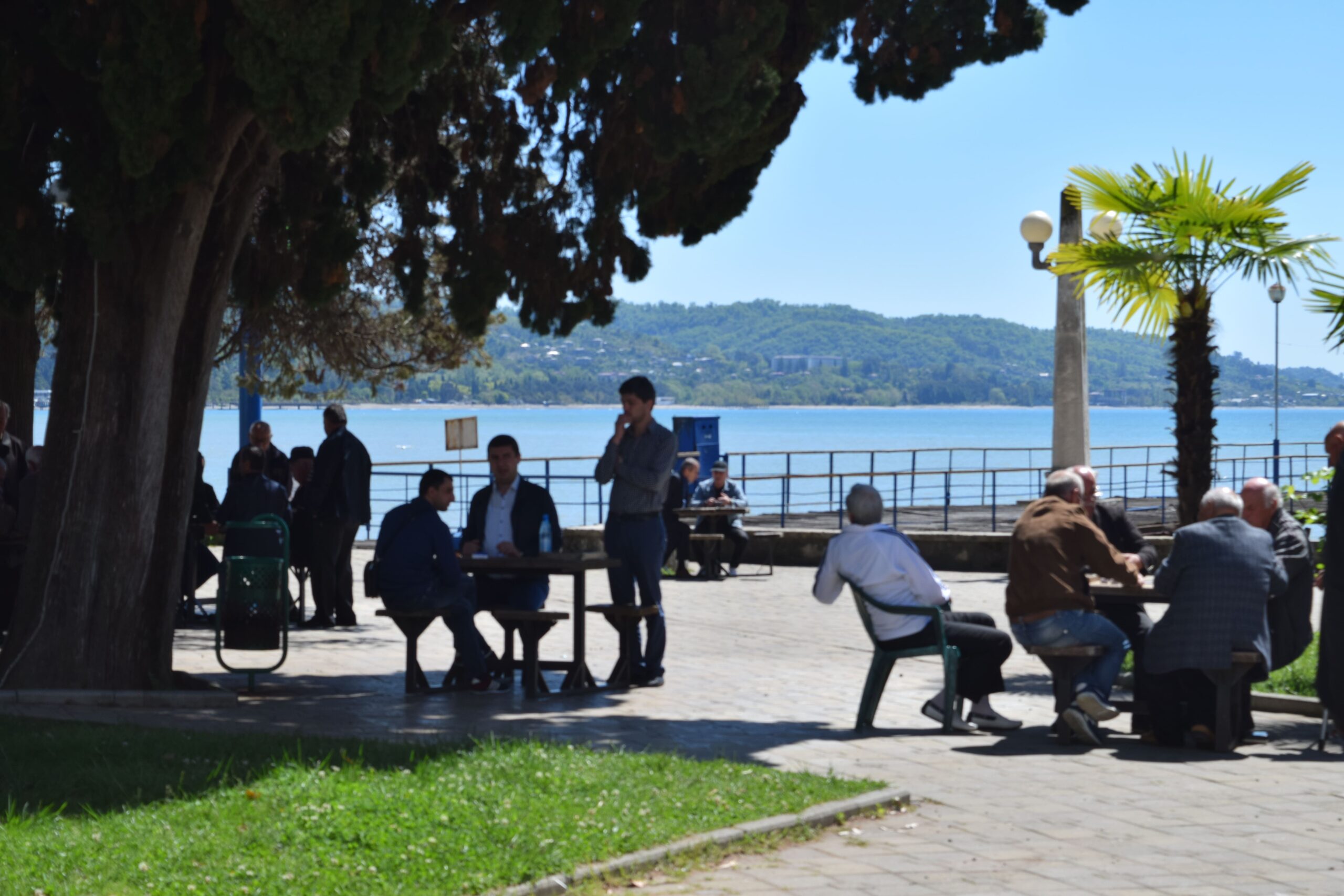
Local residents enjoy a sunny day in Sukhum. Photo: Dominik Cagara/OC Media.

Trying to increase its attractiveness on the eve of the tourist season, Abkhazia has banned police from stopping cars with Russian license plates without cause, in order to give Russian visitors ‘the opportunity to peacefully drive around the territory of the republic and visit its sights." 

Abkhazian authorities also hope to attract tourists by way of mention in the Russian media, and as such have organised a tourist forum in Abkhazia for Russian tour operators and journalists.

But some in the hospitality business point out that such government measures can cause more harm than good. ‘As soon as the name of our hotel appears on TV or in articles, in a couple of days a tax inspector or a government employee comes to us to check whether everything is in order with our fire safety, asking that we pay them [a bribe]’, the owner of a 30-room hotel in Gagra, who did not wish to be identified, told OC Media

Anna Kalyagina, President of the Tourism Union of Abkhazia, has expressed doubts that the power grid can withstand the expected volume of electricity consumption. ‘Today, in a relatively warm period, there are blackouts every three hours. Who will give us a guarantee that the lights will be on regularly in the summer?” Kalyagina told OC Media

Most hotels have diesel generators and multi-tonne water tanks, which provide electricity autonomously, but this is not a way out of the situation, Kalyagina emphasised. 

‘Officials tell us: stock up on diesel fuel and water. We are stocking up, but the state also has to do something for us. It is the state that should provide us with [good] conditions in which to work. Our concern is to attract tourists, earn money and replenish the treasury with taxes’, she said.

Tourism in a pandemic

Abkhazian authorities have worked hard to ensure that despite the ongoing pandemic, Russian tourists will have as few impediments to their visit as possible. They have also tried to reassure the residents of Abkhazia that such a course would not worsen the epidemiological situation.

Responding to a Russian government decree that stipulates that all Russians returning from overseas trips must undergo PCR testing from 15 April, the press service of the government of Abkhazia announced that the measure does not apply to Russian tourists travelling to Abkhazia.

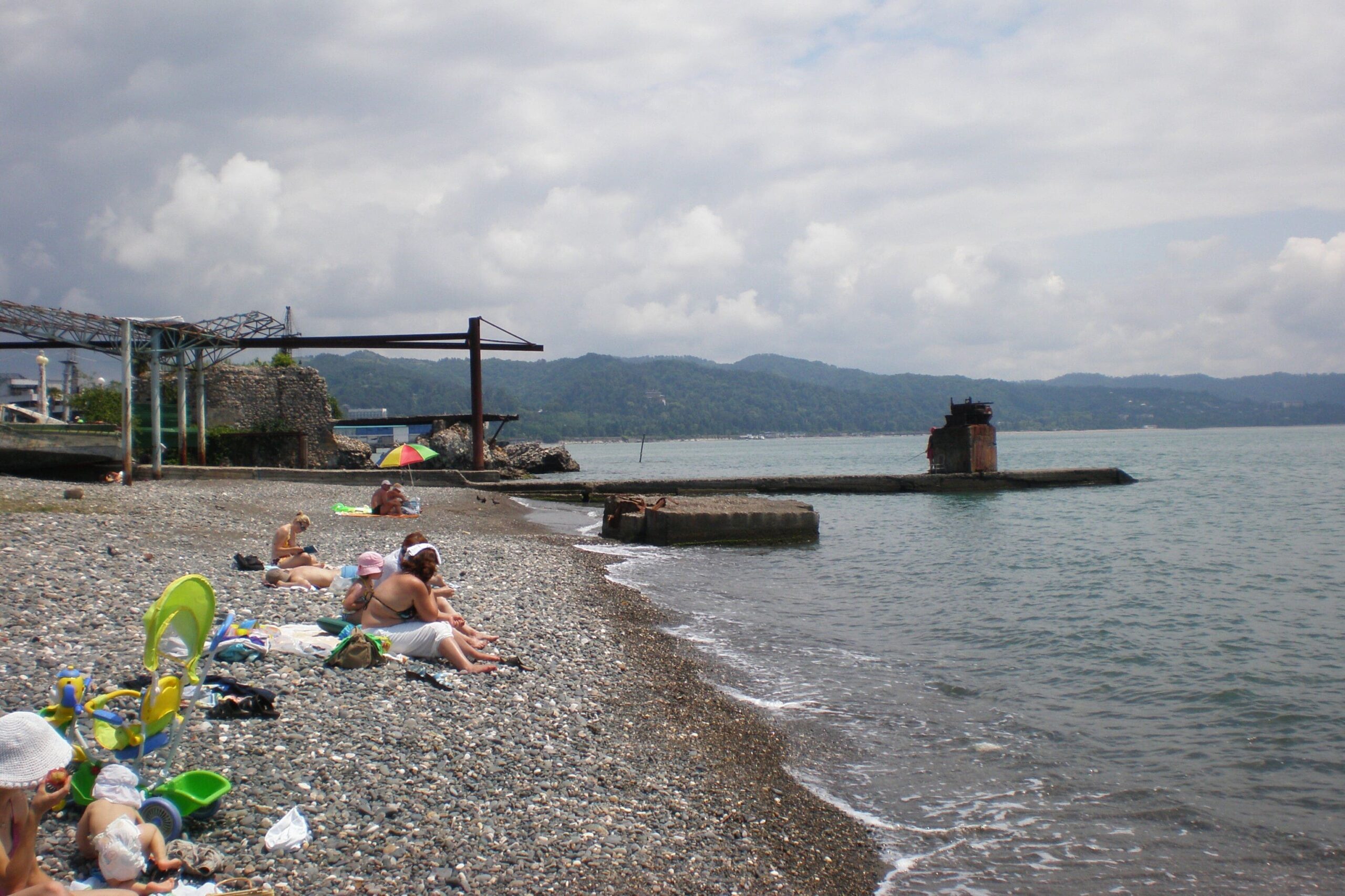
Relaxing on a beach in Sukhum. Photo: Dominik Cagara/OC Media.

Meanwhile, Minister of Tourism of Abkhazia Teimuraz Khishba has tried to assure Abkhazians that tourists will not lead to another wave of COVID-19.  ‘Look at the statistics: the majority of cases were in Sukhum, while Gagra, the most populous resort with tourists, showed the lowest incidence rates. This suggests that tourists are not a source of infection’, he said. 

Alias ​​Ubiria agrees with the Minister of Tourism. Ubiria’s family became ill with the coronavirus after the end of last year’s tourist season, even though they had received guests all summer long.

‘Tourists keep apart. They have their own rooms, their own kitchen’, Ubiria said. So long as you don’t hug and kiss them, then you don’t have much to fear. Besides, by the summer we will probably all be vaccinated.’  

Vaccinations in Abkhazia have been delayed three times to date. Initially, residents of Abkhazia were scheduled to receive their first jabs in January, but that got pushed back to February and then to the beginning of March. It still hasn’t started.

The primary geographic terms used in this article are those of the author’s.  For ease of reading, we choose not to use qualifiers such as ‘de facto’, ‘unrecognised’, or ‘partially recognised’ when discussing institutions or political positions within Abkhazia, Nagorno-Karabakh, and South Ossetia. This does not imply a position on their status.

কানাডা গমনেচ্ছুদের জন্য অত্যন্ত জরুরি: আপনার কি ATIP অ্যাকাউন্ট আছে? না থাকলে কেন আজই প্রয়োজন?

কানাডা গমনেচ্ছুদের জন্য অত্যন্ত জরুরি: আপনার কি ATIP অ্যাকাউন্ট আছে? না থাকলে কেন আজই প্রয়োজন? আপনি কি কানাডার ভিসার জন্য আবেদন করেছেন? অথবা...